


Infrared vs Traditional Sauna for Athletic Performance
Last Updated: October 25, 2026
Quick Summary
Infrared vs traditional sauna differs primarily in heat delivery: infrared saunas use far infrared light panels to warm your body directly at 120-140°F, while traditional saunas heat the air around you to 160-200°F using a stove or electric heater. For athletes, infrared saunas support longer sessions of 30-45 minutes in dry heat, whereas traditional saunas typically limit sessions to 15-25 minutes due to their intense, humid environment.
- Infrared saunas operate at 120-140°F with dry heat; traditional saunas reach 160-200°F with steam.
- Infrared sessions typically last 30-45 minutes; traditional sauna sessions peak at 15-25 minutes.
- Most athletes use a sauna 2-4 times per week as part of their recovery routine.
- Infrared saunas plug into standard 120V outlets; larger models may require 240V dedicated circuits.
- Infrared cabins fit compact spaces like bedrooms; traditional saunas often need larger dedicated footprints.
Table of Contents
- How Infrared and Traditional Saunas Generate Heat
- Infrared Sauna Temperature vs Traditional Sauna Temperature
- Infrared Sauna Session Length and Frequency for Athletes
- Sauna After Workout Routine: Timing and Protocol
- Home Sauna Electrical Requirements and Installation
- Infrared vs Traditional Sauna: Practical Comparison for Athletes
- Building Your Home Recovery Setup
- Frequently Asked Questions
- Frequently Asked Questions
How Infrared and Traditional Saunas Generate Heat
When comparing infrared vs traditional sauna, the two create warmth through fundamentally different mechanisms. A traditional sauna heats the air around you using a wood-burning stove or electric heater. The sauna rocks sit on top of the heat source, and when water is poured over them, steam rises and fills the cabin.
An infrared sauna works differently. Instead of heating the air, infrared panels emit far infrared light wavelengths that warm your body directly. The air temperature stays lower, typically 120-140°F, because the heat source is the light itself, not the surrounding environment.
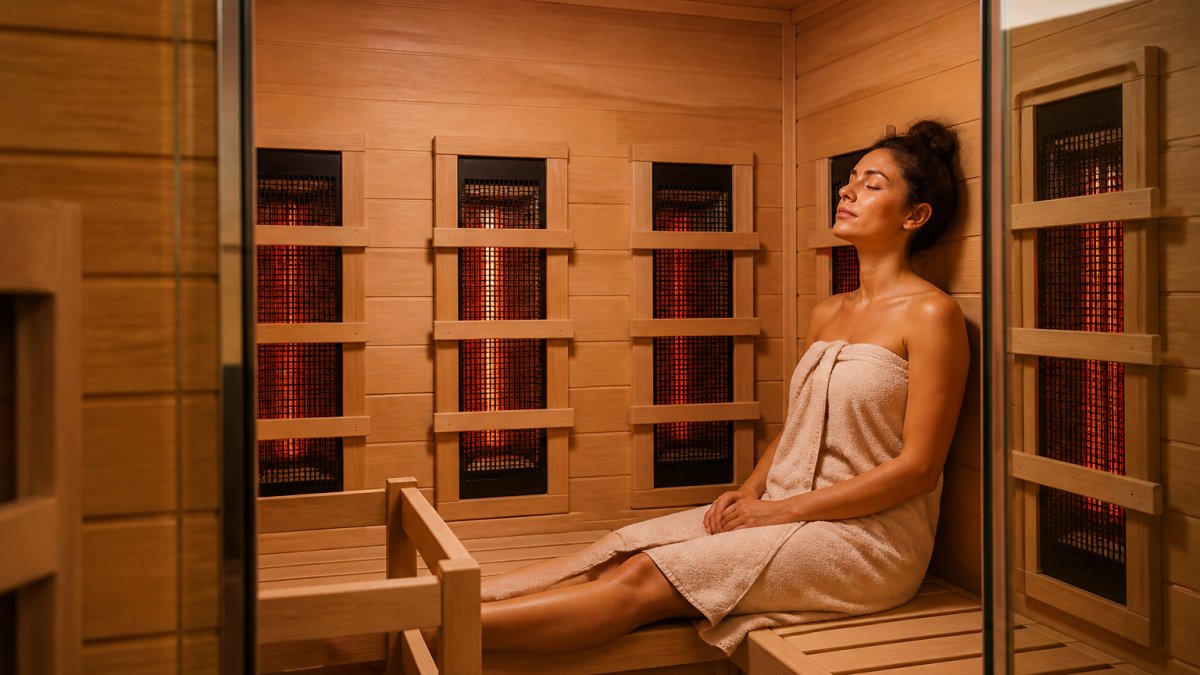
This distinction matters for athletes. Traditional saunas create an intense, humid environment that requires heat acclimation. Infrared saunas deliver consistent, dry heat that many find more tolerable during longer sessions.
Infrared Sauna Temperature vs Traditional Sauna Temperature
The temperature difference between infrared and traditional saunas is one of the most practical distinctions for athletic use. Traditional saunas typically operate between 160-200°F, with some reaching higher.
Infrared saunas operate at lower air temperatures, usually 120-140°F. The SalusHEAT Sublime-901BR, for example, reaches a maximum of 149°F. The CASAINC corner model maxes out at 149°F as well.
For athletes accustomed to gym saunas, this lower air temperature can feel less intense initially. But the sensation of warmth builds differently. In a traditional sauna, you feel the heat almost immediately because the air is so hot. In an infrared sauna, the warmth develops more gradually.
The practical advantage for athletic recovery routines is that infrared's lower temperature allows for longer, more comfortable sessions. Many athletes find they can sit for 30-45 minutes in an infrared sauna but only 15-20 minutes in a traditional sauna at peak temperature.
Infrared Sauna Session Length and Frequency for Athletes
Session length and frequency depend on your recovery goals and personal tolerance. Most athletes begin with shorter sessions and gradually extend them as their heat tolerance builds.
For infrared saunas, a typical session ranges from 20 to 45 minutes. Beginners often start at 20-25 minutes at a moderate temperature setting, then increase duration as comfort improves.
Frequency matters as much as duration. Many athletes use a sauna 2-4 times per week as part of a broader recovery routine. Some use it daily, though this depends on individual preferences and schedule.
Traditional saunas, with their higher air temperatures, typically support shorter sessions, 15-25 minutes for most users. The intense heat limits how long most people can comfortably stay inside.
The key difference is flexibility. An infrared sauna's lower temperature and dry environment make it easier to fit into a consistent routine because sessions feel less demanding and recovery feels less disruptive to your day.
Sauna After Workout Routine: Timing and Protocol
Timing a sauna session after a workout depends on your immediate recovery priorities. Many athletes wait 15-30 minutes post-exercise before entering a sauna.
A practical post-workout protocol might look like this: finish your training, cool down with light movement or stretching for 10-15 minutes, hydrate, then enter the sauna for 25-35 minutes. The sauna becomes part of your broader recovery session.
Hydration before, during, and after is essential. Drink water before entering, bring water into the sauna if your model allows it, and rehydrate afterward.
The choice between infrared and traditional affects how you structure this routine. An infrared sauna's lower temperature and drier environment make it easier to sit for extended periods, which suits athletes who want a longer, more deliberate recovery window.
Some athletes use sauna sessions as a standalone recovery tool on non-training days, while others integrate them immediately after workouts. Both approaches can work; consistency matters more than timing perfection.
Home Sauna Electrical Requirements and Installation
Before purchasing a home sauna, verify your electrical setup. Most residential infrared saunas run on standard 120V outlets, which simplifies installation but matters for your specific model.
The SalusHEAT Sublime-901BR draws 1,510W and requires its own dedicated 15-amp circuit. It plugs into a standard 120V outlet with a 10-foot cord.
Never run a sauna through an extension cord or power strip. These can overheat and create fire risk.
For larger models, electrical demands increase. The HeatWave Great Bear 6-Person Cedar Infrared Sauna requires 240V at 20 amps and draws 2,700W.
Installation space is equally important. The SalusHEAT fits in a 35.5-inch square footprint, roughly the size of a large closet. The CASAINC corner model uses corner space efficiently at 47.24 inches on each side.
1-Person Red Cedar Far Infrared Sauna with Bluetooth →
Check your floor's load capacity. The HeatWave weighs 484 pounds; most residential floors handle this easily, but older homes or upper-floor installations warrant verification.
Infrared vs Traditional Sauna: Practical Comparison for Athletes
The choice between infrared and traditional saunas depends on your recovery priorities, space, and tolerance for heat intensity. Here's how they compare across key athletic considerations.
Heat intensity and tolerance. Traditional saunas deliver higher air temperatures (160-200°F), creating an intense, humid environment. This intensity suits athletes who've acclimated to heat and want a powerful, acute session.
Session duration. Infrared saunas support longer, more comfortable sessions, 30-45 minutes is common. Traditional saunas peak at 15-25 minutes for most users because the air temperature becomes unbearable beyond that.
Comfort and consistency. Infrared saunas feel more consistent because the heat source is the light itself, not fluctuating air temperature.
Space and installation. Infrared saunas typically require less space and simpler electrical setup. Most plug into standard 120V outlets. Traditional saunas often need dedicated space and, in some cases, ventilation or floor reinforcement.
Cost. Infrared saunas range from $1,700 for a portable model to $5,329 for a 6-person cabin. Stack For Wellness offers best infrared sauna for home recovery to help you compare models and specifications across your needs.
| Attribute | Infrared Sauna | Traditional Sauna |
|---|---|---|
| Air Temperature | 120-140°F | 160-200°F |
| Humidity | Dry | Humid (steam) |
| Session Length | 30-45 minutes typical | 15-25 minutes typical |
| Installation | Standard 120V outlet | May need dedicated circuit or ventilation |
| Space Requirement | Compact (35-47 inches) | Larger footprint |
| Heat Feel | Gradual, consistent warmth | Intense, immediate heat |
| Best For | Extended sessions, beginners | Acute intensity, heat-acclimated athletes |
Building Your Home Recovery Setup
Creating a cohesive home recovery environment means selecting equipment that complements each other.
Many athletes layer infrared sauna sessions with cold exposure, red light therapy, or massage, a stacked recovery protocol. The sequence matters.
For a dedicated recovery room, start with a sauna as your anchor. The 1-Person Red Cedar Far Infrared Sauna with Bluetooth works well for solo athletes or couples with limited space.

If you have more space or train with a partner, the 2-Person Infrared Sauna with Premium Audio, Canadian Hemlock offers room for two at $3,295.

For a comprehensive recovery sanctuary, explore how infrared saunas complement cold plunges and other modalities. Stack For Wellness also offers guidance on designing a full home recovery sanctuary that integrates sauna, cold exposure, light therapy, and massage into a unified system.
The key is consistency. Athletes who use a well-designed home recovery setup 3-5 times weekly report that the routine becomes second nature, part of their training rhythm rather than an add-on.
This product is intended for general wellness and relaxation. It is not a medical device and is not intended to diagnose, treat, cure, or prevent any disease.
Frequently Asked Questions
What's the difference between far infrared and near infrared wavelengths?
Far infrared (FIR) and near infrared (NIR) differ in wavelength. Far infrared operates at longer wavelengths (3-50 micrometers) and is the type used in most home sauna cabins. It creates the warming sensation you feel during a session. Near infrared operates at shorter wavelengths (0.7-3 micrometers) and is commonly used in red light therapy panels. Most home infrared saunas use far infrared panels because they distribute heat evenly throughout a cabin. Stack For Wellness infrared models, including the SalusHEAT and Durasage, use far infrared carbon panels for this reason.
How often should I use an infrared sauna for athletic recovery?
Most athletes use an infrared sauna 2-4 times per week as part of their recovery routine. Beginners often start with 2 sessions weekly to allow their bodies to acclimate to the heat. Experienced users may session more frequently, up to daily use, depending on training intensity and schedule. The key is consistency over frequency. A reliable 3-times-weekly routine outperforms sporadic daily sessions. Listen to your body; if you feel fatigued or overheated, reduce frequency. Hydration is essential regardless of how often you use the sauna.
Can I use a portable infrared sauna like the Silver Elite for athletic recovery?
Yes. The Relax Silver Elite portable sauna is designed for personal use and fits into any room. It warms in about 1 minute and reaches approximately 150°F. The tent folds into a carry bag for storage or travel. Sessions typically run 20-30 minutes because the portable design is more compact than a cabin model. The Silver Elite is ideal for athletes with limited space, frequent travelers, or those testing whether sauna fits their routine before investing in a larger cabin. It plugs into any standard 120V outlet and requires no installation.
Do I need a dedicated electrical circuit for an infrared sauna?
Yes, for most models. The SalusHEAT Sublime-901BR (1,510W) and CASAINC corner model (1,520W) each require a dedicated 15-amp circuit. The Durasage 2-Person model (1,700W) also needs its own circuit. Never run a sauna through an extension cord or power strip; plug directly into a wall outlet. The HeatWave Great Bear (2,700W, 240V) requires a dedicated 20-amp 240V circuit, which may need professional installation. Before purchasing, confirm your home has the required outlet and circuit capacity. If uncertain, consult an electrician.
Frequently Asked Questions
What is the main difference between infrared and traditional saunas?
Traditional saunas heat the air around you to 160-212°F using a stove and rocks, creating a dry or steam-filled environment. Infrared saunas use carbon or ceramic heating panels that emit infrared light directly warming your body at lower air temperatures (120-150°F). Traditional saunas rely on convection and conduction; infrared saunas use radiant heat. Both designs are used for relaxation and general wellness routines, but they differ in how quickly they warm up and how the heat is distributed.
How long should an infrared sauna session last for athletic use?
Most athletes use infrared sauna sessions between 20 and 40 minutes as part of a post-workout routine. Beginners often start with 15-20 minutes to acclimate to the heat. Sessions longer than 45 minutes are generally not recommended without medical guidance. Frequency varies by individual preference and schedule; some athletes use infrared saunas 2-3 times per week, while others incorporate them once weekly. Always hydrate before and after your session.
Can I use a sauna immediately after a workout?
Many athletes wait 10-15 minutes after finishing exercise before entering a sauna, allowing heart rate and core temperature to begin normalizing. This brief window helps your body transition safely into the heat exposure. A post-workout sauna session is typically shorter (15-25 minutes) than a standalone relaxation session. Cool down gradually afterward rather than jumping into cold water immediately, as the contrast can stress your cardiovascular system. Always drink water before, during, and after your session.
What electrical setup do I need for a home infrared sauna?
Most residential infrared saunas operate on a standard 120V household outlet and draw 1,400-1,700 watts. Larger models or those requiring 240V (such as the HeatWave Great Bear at 2,700 watts) need a dedicated 20-amp circuit and may require an electrician to install. Before purchasing, check your home's circuit capacity and ensure the sauna has its own outlet, do not use an extension cord or power strip. Consult the manufacturer's electrical specifications for your exact model to confirm requirements.
Meta Title: Infrared vs Traditional Sauna for Athletic Performance: Which Is Better?
Meta Description: Compare infrared and traditional saunas for athletic recovery. Learn heat differences, session length, electrical requirements, and which type fits your home recovery setup.


