Infrared Sauna vs Cold Plunge: Recovery Comparison
Table of Contents
- Infrared Sauna vs Cold Plunge: What's the Difference
- How Infrared Sauna Heater Types Shape Your Session
- Cold Plunge Chiller Horsepower and Temperature Control
- Sequencing Your Sauna and Cold Plunge Routine
- Infrared Sauna Installation Requirements for Your Home
- Choosing Your Recovery Setup: Side-by-Side Comparison
- Which Recovery Modality Fits Your Goals
- Frequently Asked Questions
- Frequently Asked Questions
Last Updated: October 7, 2026
Infrared Sauna vs Cold Plunge: What's the Difference
When building a home recovery environment, understanding infrared sauna vs cold plunge recovery helps you choose equipment that shapes everything that follows. An infrared sauna uses far infrared carbon heaters to deliver dry heat; a cold plunge system uses a chiller to hold water at specific temperatures.
The core distinction is heat versus cold exposure. Infrared saunas create a warm session environment using far infrared technology, typically reaching 140°F or higher depending on the model. Cold plunges hold water between 34°F and 39°F.
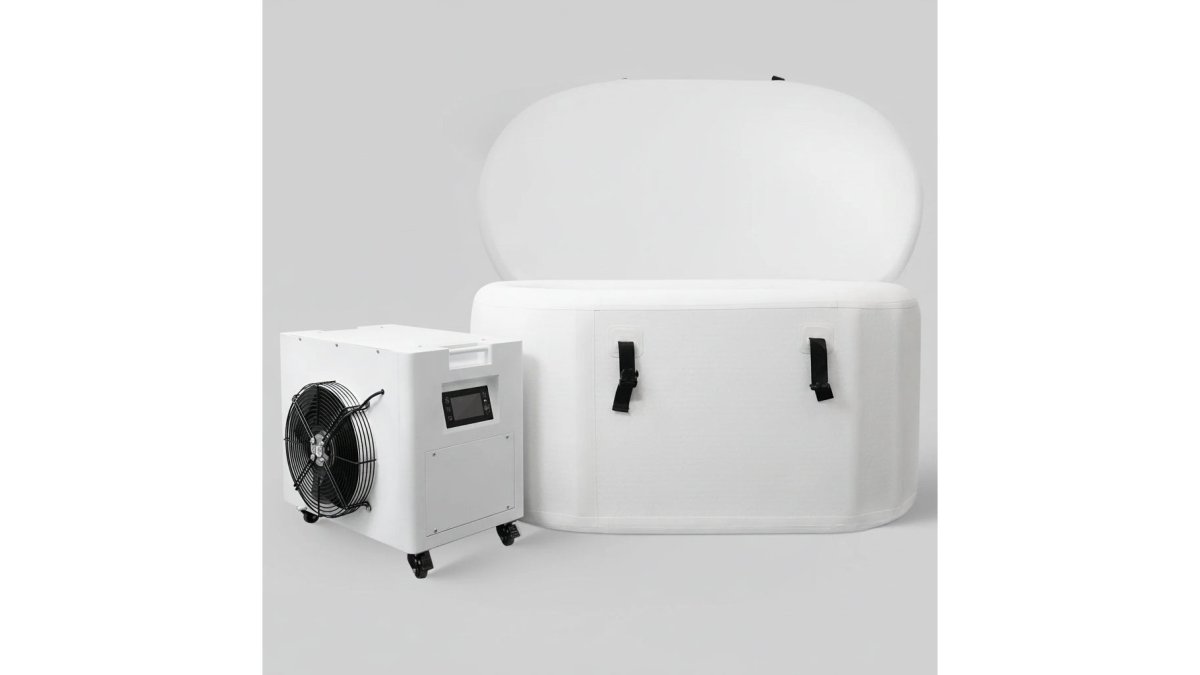
The question isn't which one wins in isolation, it's which combination fits your space and budget.
How Infrared Sauna Heater Types Shape Your Session
The number and type of heater panels determine how evenly heat reaches your body and how quickly the cabin warms up.
A one-person model like the SalusHEAT Sublime-901BR uses eight low-EMF carbon panels positioned around the front, back, shoulders, legs, calves, and feet, so heat comes from multiple angles at once.

Larger cabins like the HeatWave Great Bear use ten InfraWave FAR carbon heaters and seat six people.
More heaters mean faster warm-up and more even heat distribution. A single-person cabin with eight panels reaches target temperature faster than a six-person cabin with ten panels because the energy is concentrated in a smaller volume.
Canadian red cedar is the standard wood in quality infrared saunas because it resists rot and mildew, holds its shape in hot, dry conditions, and carries a natural cedar scent.
Cold Plunge Chiller Horsepower and Temperature Control
The chiller's horsepower determines how cold the water gets and how fast it cools down. Horsepower correlates to cooling capacity, measured in BTU.
A quarter-horsepower chiller like the one in the Modtub 2.0 delivers 3,010 BTU of cooling and holds water between 37°F and 39°F without ice.

A 1 HP chiller like the Drift Inflatable system holds 37.4°F and takes about 2 hours to reach minimum temperature, cutting cool-down time roughly in half.
The RevX X Tub uses a 1.5 HP chiller paired with separate 20-micron filtration. It holds water from 34°F to 104°F, so the same tub serves cold or warm sessions.
Chiller power determines three practical outcomes: minimum achievable temperature, how quickly you reach it, and how hard the chiller works to maintain it.
Modern systems like the Drift and RevX use WiFi and mobile apps, letting you set temperature remotely before you walk outside. Older systems required manual adjustment on-site.
Sequencing Your Sauna and Cold Plunge Routine
The order in which you use heat and cold in your infrared sauna vs cold plunge recovery routine is a personal preference, not a fixed rule. Both sequences work.
Cold-first routines reverse the order: cold plunge for 1 to 3 minutes, warm up naturally or with light movement, then 15 to 20 minutes in the sauna.
The most important variable is consistency. A routine you actually do three times per week beats a theoretically perfect routine you skip.
Most people find 15 to 20 minutes in the sauna and 1 to 3 minutes in the cold plunge sustainable. Longer sessions just increase the likelihood you'll skip the routine.
If you're doing both in one session, allow at least 5 to 10 minutes between them so your body can regulate temperature. This is a comfort factor, not a requirement.
Infrared Sauna Installation Requirements for Your Home
A one-person sauna like the SalusHEAT Sublime-901BR has a 35.5-inch footprint, roughly 9 square feet, and fits in a bedroom corner, spare room, or home gym.
Larger cabins demand more space. The HeatWave Great Bear is 6 feet 4 inches tall, 6 feet 3 inches wide, and 4 feet 11 inches deep, needing roughly 80 square feet of clear, level floor space plus wall clearance for the door.

The one-person SalusHEAT draws 1,510 watts and plugs into a standard 120V outlet on its own 15-amp circuit; don't run it through an extension cord or share the outlet.
Flooring can be carpet or hard floor. The sauna sits on its own base and needs no special preparation. On carpet, ensure the floor underneath supports the weight: a one-person sauna weighs about 225 pounds, and a six-person cabin weighs 484 pounds.
1-Person Red Cedar Far Infrared Sauna with Bluetooth →
Infrared saunas don't require external venting like traditional steam saunas. The cabin has adjustable roof vents for fresh air during sessions, but you don't need to cut holes in walls or install ducting.
Infrared saunas arrive pre-assembled or require minimal assembly, and they plug in anywhere. No plumbing, no wiring work, no permits.
Choosing Your Recovery Setup: Side-by-Side Comparison
| Feature | One-Person Infrared Sauna | Six-Person Infrared Sauna | Quarter-HP Cold Plunge | 1 HP Cold Plunge | 1.5 HP Cold Plunge |
|---|---|---|---|---|---|
| Footprint | 35.5" sq. | 75" x 59" | 75" total length | 53" x 31.5" | 93" x 42" |
| Heaters / Cooling | 8 panels | 10 panels | 0.25 HP | 1 HP | 1.5 HP |
| Temperature Range | Up to 149°F | Up to 140°F | 37-39°F | 37.4°F | 34-104°F |
| Warm-Up / Cool-Down | 25-40 min | 40-60 min | 4-6 hours | ~2 hours | ~2 hours |
| Power Draw | 1,510W @ 120V | 2,700W @ 240V | ~500W @ 120V | ~1,200W @ 120V | ~1,500W @ 110V |
| Setup Time | 20-30 min | 2-3 hours | ~10 min | ~10 min | ~10 min |
| Best For | Solo sessions, small spaces | Group use, family | Budget-conscious, patience | Balance of speed & cost | Maximum flexibility |
The trade-off is clear: single-person saunas are faster to set up and fit tighter spaces, while six-person cabins serve multiple people. Cold plunges scale with horsepower: more power means faster cooling and lower operating strain, but higher upfront cost and electrical draw.
Stack For Wellness carries options across this spectrum because recovery setups are personal. The goal is matching equipment to your space, budget, and usage pattern.
Which Recovery Modality Fits Your Goals
Your choice between infrared sauna and cold plunge, or both, depends on what you want from your recovery routine.
If your primary goal is relaxation and general wellness, a sauna alone works well. The SalusHEAT Sublime-901BR includes Bluetooth speakers and chromotherapy lighting, turning a 20-minute session into an immersive experience.
If you want a comprehensive recovery system, combining both modalities creates a more complete routine. The contrast between heat and cold gives you more options to experiment with.
Space and budget are real constraints. A complete recovery room with a six-person sauna and a high-performance cold plunge requires 150+ square feet and a significant investment.
The inflatable Drift Cold Plunge is a bridge option if you're unsure about a permanent installation.
This product is intended for general wellness and relaxation. It is not a medical device and is not intended to diagnose, treat, cure, or prevent any disease.
Frequently Asked Questions
How much space do I actually need for both a sauna and cold plunge?
A one-person sauna takes 35.5 inches square (about 9 square feet), and a compact cold plunge like the Drift takes 53 inches long by 31.5 inches wide. Together, they fit in a spare bedroom or large garage corner, roughly 150 square feet total if you want comfortable movement between them. A six-person sauna plus a full-size cold plunge system requires 200+ square feet and is better suited to a dedicated recovery room.
Do I need an electrician to install an infrared sauna?
The one-person SalusHEAT plugs into a standard 120V outlet with a 15-amp circuit, no electrician needed. The six-person HeatWave requires 240V and 20 amps, which may need an electrician if your space doesn't already have 240V available. Check your home's electrical panel and available circuits before ordering. Cold plunges are similarly straightforward: most run on 120V household power.
What's the difference between a quarter-horsepower and a 1.5 horsepower chiller?
A quarter-HP chiller cools water to 37-39°F in 4 to 6 hours and holds that temperature with minimal power draw. A 1.5 HP chiller reaches 34°F in about 2 hours and can also heat water up to 104°F, giving you flexibility for warm or cold sessions. The trade-off is higher upfront cost and more electricity use. For daily cold plunging, a 1 HP system balances speed and efficiency.
Should I do sauna first or cold plunge first?
Either order works. Heat-first (sauna then cold) is more common because it feels less jarring. Cold-first (plunge then sauna) works too, the choice is personal preference. What matters far more is consistency: a routine you do three times per week beats a theoretically perfect routine you skip. Choose the sequence that feels sustainable for your schedule and comfort level.
Can I use a sauna or cold plunge if I have a specific health condition?
These products are designed for general wellness and relaxation. If you have any health concerns or existing conditions, consult a licensed healthcare provider before starting a new routine. They can advise whether heat or cold exposure is appropriate for your situation.
Frequently Asked Questions
Should I use an infrared sauna or cold plunge first in my recovery routine?
The sequence depends on your goals. Many athletes begin with the infrared sauna, then transition to the cold plunge. This contrast approach, moving between heat and cold, creates distinct experiences. Others reverse the order based on personal preference and what feels right after their workout. Experiment with both sequences over several sessions to find what suits your routine best.
What infrared sauna heater types should I look for?
Far infrared carbon panel heaters are the most common choice for home saunas. The 1-Person Red Cedar Far Infrared Sauna uses eight low-EMF carbon panels positioned to wrap your front, back, shoulders, legs, calves, and feet, ensuring even heat distribution. The 6-Person model includes ten InfraWave FAR carbon panels generating 2,700 watts. Carbon heaters warm up quickly (typically 25 to 60 minutes depending on room temperature) and distribute heat evenly without cold spots.
How much horsepower does a cold plunge chiller need?
Chiller horsepower determines cooling speed and temperature stability. The Modtub 2.0 uses a quarter-horsepower chiller with 3,010 BTU of cooling capacity, holding water at 37 to 39°F. The Drift Inflatable uses a 1 HP chiller that reaches 37.4°F in about 2 hours. The RevX LUX system features a 1.5 HP chiller capable of reaching 34°F and also heating to 104°F. Higher horsepower cools faster and maintains temperature more efficiently, which matters if you plan frequent sessions or want precise temperature control via WiFi app.
Can I use an infrared sauna and cold plunge in the same session?
Yes. Alternating between infrared heat and cold water immersion is called contrast therapy and is a common recovery protocol. A typical session might include 15 to 20 minutes in the sauna, followed by 2 to 3 minutes in the cold plunge, repeated 2 to 3 times. This back-and-forth creates distinct experiences. Start conservatively and listen to how your body responds, adjusting duration and temperature based on personal preference.
What are the electrical and space requirements for infrared sauna installation?
The 1-Person Red Cedar Far Infrared Sauna draws 1,510 watts and plugs into a standard 120V household outlet with a 15-amp circuit. It measures 35.5 inches square and 72.5 inches tall, fitting a bedroom corner or spare room. The 6-Person model requires 240V, 20A service and draws 2,700 watts, making it suitable for homes with dedicated electrical service. Both saunas need adequate clearance for door swing and air circulation. Assembly takes 20 to 30 minutes with no tools required for the 1-person model; the 6-person model requires three people and basic tools.
Meta Title: Infrared Sauna vs Cold Plunge: Complete Recovery Comparison Guide
Meta Description: Compare infrared sauna vs cold plunge recovery setups. Learn heater types, chiller horsepower, sequencing, installation requirements, and which system fits your home and goals.