


Benefits of Light Therapy Masks for Skin: A 2026 Guide
Table of Contents
- What Light Therapy Masks Are and How They Work
- LED Mask Wavelengths: 660nm and What It Targets
- Skin Benefits People Use Light Therapy Masks For
- LED Face Mask Session Length: How Long Is Enough?
- How Often to Use an LED Face Mask
- How to Clean an LED Face Mask (and Keep It Working)
- Choosing a Mask: Specs That Matter More Than Marketing
- Conclusion
- Frequently Asked Questions
Meta Title: Benefits of Light Therapy Masks for Skin: A 2026 Guide
Meta Description: A practical 2026 guide to light therapy masks: what 660nm red light does, session length, how often to use one, cleaning steps, and the specs that actually matter.
Last Updated: October 20, 2026
What Light Therapy Masks Are and How They Work
A light therapy mask is a wearable face device that shines a fixed wavelength of light onto the skin for a set number of minutes per session.
The Hardware Behind the Glow
Four parts decide whether a mask is worth owning.
- LED count and spacing. More LEDs packed closer together means more even light. Gaps show up as bands of weaker coverage.
- Wavelength. One fixed wavelength is simpler. Multiple wavelengths mean more settings to learn.
- Shell material. Soft silicone bends to the shape of your face. Hard plastic sits on top of it.
- Session timer. A fixed short session removes guesswork. You press start and stop thinking about it.
Cut-outs for the eyes, nose, and mouth let you see, breathe, and talk during a session, the difference between a device you use and one that sits in a drawer.
LED Mask Wavelengths: 660nm and What It Targets
Most red LED masks run at 660nm, a red wavelength in the visible spectrum. Blue masks typically run near 415nm. Wavelength is the first thing to check on any product page.
Red vs. Blue Light: Choosing a Wavelength
Pick red if your routine is about overall skin appearance. Pick blue if your focus is oily skin. Pick a dual-wavelength device only if you will genuinely switch between the two modes.
A single-wavelength mask is easier to stay consistent with, nothing to decide at 10pm when you're tired.
Skin Benefits People Use Light Therapy Masks For
Sort what people report into three buckets: what has been studied in a controlled setting, what has only been studied in small or early trials, and what is marketing language with no study behind it.
A light therapy mask delivers a fixed dose of light at a fixed wavelength for a fixed number of minutes. What a person notices over weeks depends on the device, the wavelength, the fit, and consistency.
What the Research Actually Shows
Red light in the 630nm to 660nm band has been examined in small randomized trials and split-face studies, usually over 8 to 12 weeks with sessions several times per week.
Blue light near 415nm has been studied in shorter, more targeted protocols, often with a different device class than a consumer mask.
The evidence base is real but thin, effect sizes are modest, and the gap between a study device and a consumer mask is wide.
What People Commonly Report
The goals people bring to a mask routine cluster around a few appearance outcomes: firmer-looking skin, smoother texture, more even tone, and a clearer-looking complexion. A mask is a device in a routine, not a replacement for one.
- Firmness and appearance. The most-studied use of red light. Expect subtle change over weeks, not days.
- Texture and tone. Commonly reported by consistent users, though hard to separate from the accompanying skincare routine.
- Oily skin. Blue light is the wavelength associated with this goal in the category. Results vary widely by device.
- Overall look. The least specific goal and the easiest to overclaim.
What to Be Skeptical Of
Watch for before-and-after photos with different lighting, claims of visible change after one session, and language that borrows clinical vocabulary without citing a study. A page listing wavelength, LED count, and session length tells you something; a page listing only outcomes tells you less.
LED Face Mask Session Length: How Long Is Enough?
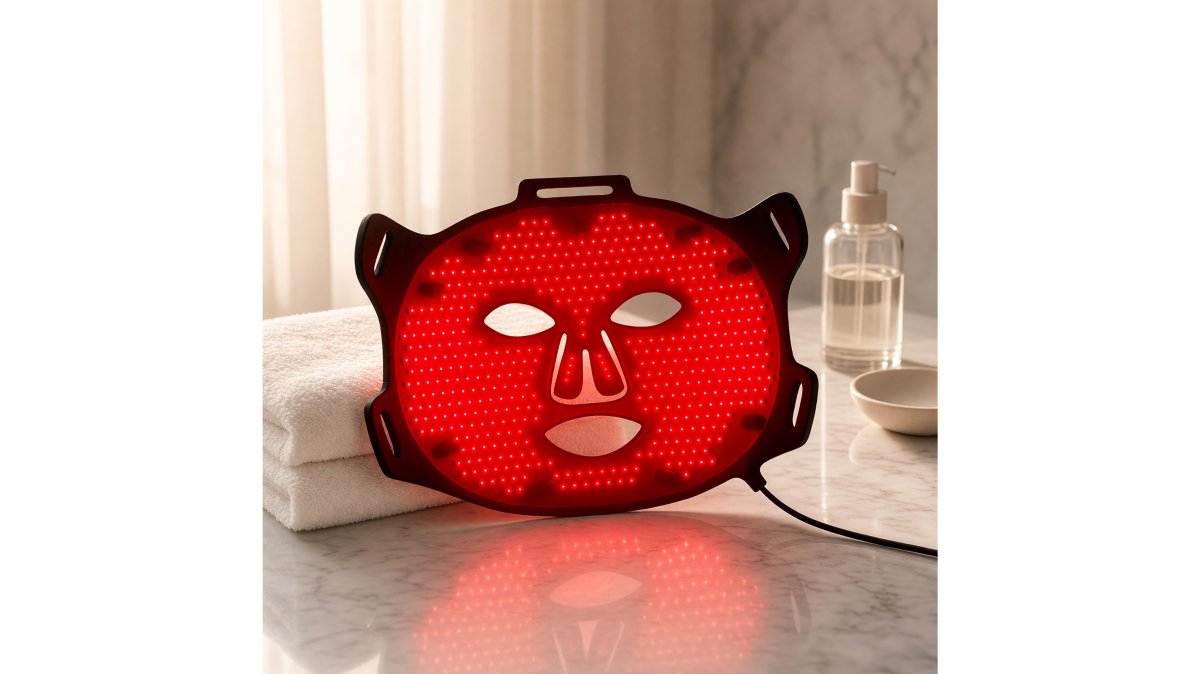
Five to ten minutes per session is the typical range for consumer LED face masks. The Lumara VISO runs a fixed 5-minute session across 470 micro-LEDs at 660nm, you press start, it runs, it stops.

Longer is not better here. A 20-minute session does not replace four 5-minute ones, and it raises the odds you'll skip the next night.
How Often to Use an LED Face Mask
Three to five sessions per week is the usual starting point. Start at three for two weeks; if your skin feels comfortable, move to five, and if it feels tight or reactive, drop back and space sessions out. Consistency beats intensity: a 5-minute session five nights a week beats a 20-minute session once a week.
How to Clean an LED Face Mask (and Keep It Working)
Wipe the inner surface after every session with a soft, slightly damp cloth. Clean the outer shell weekly. Never submerge the mask or the controller in water.
Lumara VISO Red Light Therapy Mask | 470 Micro-LEDs, 660nm, 5-Minute Sessions →
Here is the routine we recommend:
- Unplug the controller before cleaning.
- Wipe the inner shell with a soft cloth and a small amount of gentle cleanser.
- Wipe again with a clean damp cloth to remove residue.
- Dry fully with a lint-free cloth before storing.
- Wipe the controller with a dry cloth only.
- Store the mask flat, away from direct sun, with the strap loose.
Skip alcohol-based cleaners on soft silicone. They dry the material out over time. A mild cleanser and water is enough.
Choosing a Mask: Specs That Matter More Than Marketing
The useful skill is reading the numbers on a spec sheet so you can compare two devices without a reviewer in the middle. Here are the specifications that change what a session feels like, plus the ones that are mostly decoration.
Wavelength: The Number That Defines the Device
Wavelength is measured in nanometres (nm) and is the first specification to check. A red mask should list a figure in the 630nm to 660nm band; a blue mask, a figure near 415nm. A dual-wavelength device should list both figures separately, not as a color name. If a product page will not commit to a number, treat that as a data point about the page.
Irradiance and Treatment Distance
Irradiance is power delivered per unit area, usually in milliwatts per square centimeter (mW/cm²). It is the spec most consumer mask pages omit, and two masks with the same 660nm wavelength can deliver very different doses if their irradiance differs. Treatment distance matters for the same reason: a mask against the face delivers light at a shorter distance than a panel across the room, so the two sessions are not interchangeable even at the same wavelength. When irradiance is listed, check whether it was measured at the device surface or at a stated distance.
Coverage, LED Count, and Fit
LED count is a proxy for evenness, not a quality score on its own. What matters is spacing across the area that contacts your face; a high count packed into a small shell can still leave gaps at the jaw and temples.
Fit decides whether you will actually use the device. Look for an adjustable strap with a stated fit range, cut-outs for the eyes, nose, and mouth, and a shell that conforms rather than sits on top of the face.
Regulatory Status: What the Label Does and Does Not Mean
Consumer light masks are sold as general-wellness devices. A page that uses clinical vocabulary without a study citation is borrowing authority it has not earned; a page that states wavelength, LED count, session length, and shell material gives you something you can actually compare.
A Comparison Table You Can Actually Use
Use the table below as a reading guide for any spec sheet, not as a ranking of devices.
| Spec | What to Look For | Why It Matters |
|---|---|---|
| Wavelength | A number in nm, e.g. 660nm | Tells you what the LEDs emit |
| Irradiance | mW/cm² with a stated measurement distance | Lets you compare dose across devices |
| LED count | Stated as a figure, with spacing described | Even coverage across the face |
| Session length | Fixed minutes | Removes guesswork |
| Shell material | Soft silicone or flexible | Conforms to face shape |
| Fit | Adjustable strap with a stated range | Keeps the mask in place |
| Controls | Simple start/stop | Fewer settings to manage |
| Regulatory framing | General-wellness language, no medical claims | Tells you what the device is and is not |
How the VISO Reads Against That Table
The Lumara VISO lists 470 micro-LEDs, a single 660nm wavelength, a fixed 5-minute session, a flexible silicone shell, eye, nose, and mouth cut-outs, an adjustable strap, and a handheld controller on a cable. It is $479.00 and designed in the USA. If a specification you need is not on the page, ask the manufacturer rather than assuming a value, carton dimensions, assembly figures, and warranty terms are model-specific. The VISO comes as a standalone mask or in a Panel Bundle with the Lumara Illuminate panel and a Pad Bundle with a Lumara flexible light pad.
This product is intended for general wellness and relaxation. It is not a medical device and is not intended to diagnose, treat, cure, or prevent any disease.
Conclusion
The hard part of a light therapy mask routine isn't buying the device. It's keeping the sessions going past week three, when the novelty wears off.
Stack For Wellness curates recovery equipment with the specs printed in plain sight: LED counts, wavelengths in nanometres, session lengths, shell materials, and what's in the box. Our VISO mask runs 470 micro-LEDs at 660nm for a fixed 5-minute session and pairs with our panels and pads as one system.
Shop now and build a routine you'll actually keep.
Frequently Asked Questions
How often should you use an LED face mask?
Most people settle into three to five sessions per week, and the schedule matters less than consistency. A five-minute session is easy to stack onto an existing evening routine, so daily use is realistic for many. If your skin feels warm or reactive after a session, space them out to every other day and note how it responds. The Lumara VISO runs five minutes per session, which makes a daily habit simple to keep.
Is 10 minutes of red light therapy enough?
Session length depends on the device, not a universal number. Some masks are built for five-minute sessions, while others run ten or longer. Follow the manufacturer's stated session length for your specific mask rather than extending it. More time does not automatically mean more benefit, and overuse can leave skin feeling warm or irritated. The Lumara VISO, for example, is designed around a five-minute session with 470 micro-LEDs at 660nm.
What should you wear or apply before using an LED face mask?
Start with clean, dry skin. Remove makeup and sunscreen, and skip thick occlusive products that could block light from reaching the skin. A light, water-based serum is generally fine if your device's instructions allow it. Avoid active ingredients like retinoids or strong acids right before a session if your skin is sensitive. Always check your mask's user guide, since some manufacturers specify bare skin only.
Can you use an LED face mask with your regular skincare routine?
Yes, with sequencing. Most routines work best when you cleanse, run the mask session, then apply serums and moisturizer afterward. That order keeps the mask's surface clean and lets your products sit on fresh skin. If you use retinoids or exfoliating acids, apply them after the session rather than before. Clean the mask after each use so residue from skincare does not build up on the LEDs or silicone.


