Best Red Light Therapy Panels 2026
Table of Contents
- What Red Light Therapy Panels Do
- Red Light Therapy Panel Wavelengths Explained
- Key Specifications to Compare
-
Top Red Light Therapy Panels for Home Use
- Hooga PRO1500: Full-Body Coverage at Midrange Price
- Hooga ULTRA1500: Four Wavelengths with Expandable Design
- Hooga ULTRA360: Compact Quad-Wavelength Option
- Lumara Illuminate Red V2: High-Output Single Wavelength
- iReliev 2400W: Five Wavelengths with Mode Selection
- Protocol4 Red Light Panel 1000W: Linkable Full-Body System
- Wearable Options: Blankets and Bags for Flexibility
- How to Use Red Light Panels Effectively
- Maintenance and Long-Term Durability
- Conclusion
- Frequently Asked Questions
- Frequently Asked Questions
- Meta Title
- Meta Description
Last Updated: September 25, 2026
What Red Light Therapy Panels Do
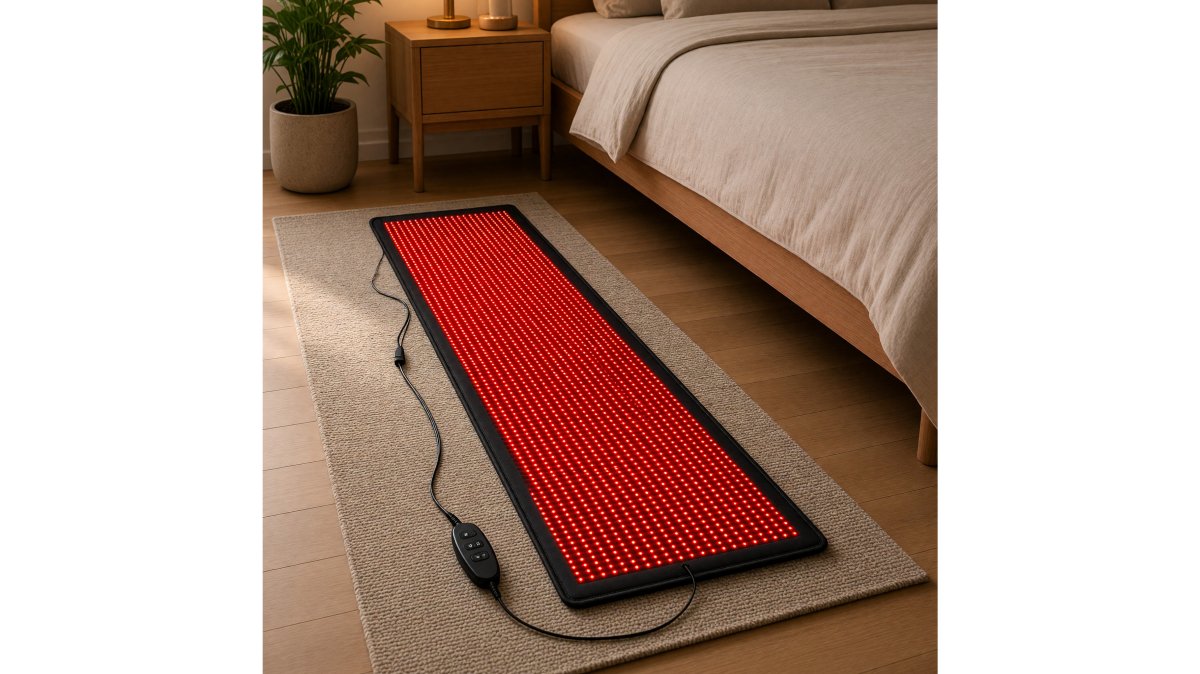
Red light therapy panels emit specific wavelengths of light (600-1000 nanometers) designed for general wellness and relaxation. Panels range from stationary full-body units to portable wearables, with mounting options including tables, walls, doors, and carrying bags. Stack For Wellness curates panels with transparent technical specifications: LED count, wavelength precision, irradiance measurements, and mounting flexibility.
Red Light Therapy Panel Wavelengths Explained
Red light therapy panels typically operate across two main spectral ranges: visible red light and near-infrared light.
660nm Red Light vs. Near-Infrared Wavelengths
Red light at 660 nanometers is visible and concentrates near the surface; near-infrared wavelengths (810nm, 830nm, 850nm) are invisible. The Hooga PRO1500 delivers both 660nm red and 850nm near-infrared from every LED. Single-wavelength panels like the Lumara Illuminate Red V2 focus exclusively on 660nm, delivering higher irradiance by concentrating all output in one band.

Why Four Wavelengths Matter
Some panels run four distinct wavelengths: 630nm and 660nm red, plus 810nm and 850nm near-infrared (Hooga ULTRA1500 and ULTRA360). For most home users, two wavelengths (660nm red and 850nm near-infrared) are commonly used. The iReliev 2400W offers three selectable modes: red only, near-infrared at 810nm, or near-infrared at 830nm and 850nm combined.
Key Specifications to Compare
When evaluating red light therapy panels, focus on irradiance, panel size, coverage area, mounting options, and control systems.
Irradiance and Power Output
Irradiance (measured in mW/cm²) indicates light intensity at a specific distance. The iReliev 2400W delivers 194 mW/cm² at 3 inches, dropping to 109 mW/cm² at 18 inches. Compare irradiance at your actual standing distance; Hooga panels are designed for 6 to 12 inches.
Panel Size and Coverage
Panel dimensions determine fit and coverage. The Hooga PRO1500 (42.5" tall, 12" wide) and ULTRA1500 (42"+ tall) provide head-to-toe coverage. The ULTRA360 (12.7" tall, 8.6" wide) is portable for desks. The iReliev 2400W (51.6" tall, 3" deep) fits close to walls. Wearables like the Red Light Therapy Blanket and Nicebeam bag eliminate mounting.
EMF and Flicker Sensitivity
Quality panels use flicker-free LED drivers to avoid rapid on-off cycling. The Hooga ULTRA series includes integrated cooling fans that hold output steady.
Top Red Light Therapy Panels for Home Use
Hooga PRO1500: Full-Body Coverage at Midrange Price
The Hooga PRO1500 delivers dual-wavelength output (660nm red and 850nm near-infrared) from 300 dual-chip LEDs in an aluminum panel. It hangs on a door, ceiling hook, or wall mount with included hardware (no drilling required). Setup: hang, plug in, and use the built-in timer. Best for: Full-body coverage without complexity. What works: Dual wavelengths, aluminum construction, simple one-button operation, included mounting hardware. What to consider: Requires wall or door space; not portable.
Hooga ULTRA1500: Four Wavelengths with Expandable Design
The Hooga ULTRA1500 delivers four wavelengths (630nm, 660nm, 810nm, 850nm) from 300 quad-chip LEDs with touchscreen controls. A 60-degree beam angle spreads light evenly; integrated cooling fans maintain steady output. Multiple panels link together to expand coverage. Best for: Wavelength flexibility and future expansion. What works: Four wavelengths, expandable design, even beam distribution, cooling fans. What to consider: Higher price than PRO1500; expansion requires additional panels.
Hooga ULTRA360: Compact Quad-Wavelength Option
The Hooga ULTRA360 is a compact 12.7-inch, 12-pound panel with 72 quad-chip LEDs delivering all four wavelengths (630nm, 660nm, 810nm, 850nm). Touchscreen and remote controls; adjustable stand with carrying handle. Best for: Limited space, travel, or testing before full-size investment. What works: Portable, four wavelengths, touchscreen and remote controls, built-in stand. What to consider: Limited coverage area; not for full-body sessions.
Lumara Illuminate Red V2: High-Output Single Wavelength
The Lumara Illuminate Red V2 focuses exclusively on 660nm red light from 1,980 high-output micro-LEDs. A 6,000-joule session runs in 5 minutes. The 270-square-inch treatment area is 15% thinner than the previous generation and delivers twice the output. Hand-assembled in California with a 3-year warranty and 40,000-hour LED life. Best for: Speed and intensity. What works: High-output single wavelength, fast sessions, large treatment area, premium build, long warranty. What to consider: Single wavelength only; premium price.
iReliev 2400W: Five Wavelengths with Mode Selection
The iReliev 2400W stands 51.6 inches tall with 480 LEDs across five wavelengths (630nm, 660nm, 810nm, 830nm, 850nm). Three selectable modes: red only, 810nm near-infrared, or 830nm/850nm combined. Measured irradiance is 194 mW/cm² at 3 inches, dropping to 109 mW/cm² at 18 inches. Eight cooling fans maintain consistent output. Touch panel and remote provide control. Best for: Wavelength flexibility and varied protocols. What works: Five wavelengths, three modes, measured irradiance data, cooling system, touch and remote controls. What to consider: Five wavelengths add complexity.
Protocol4 Red Light Panel 1000W: Linkable Full-Body System
The Protocol4 Red Light Panel 1000W delivers 660nm red and 810-850nm near-infrared from a tall, slim panel (34.6 inches tall, 11 inches wide, 2.8 inches deep). It includes a floor stand, door hook, and wall mounting hardware. A digital link cable lets you chain a second panel so both run synchronized. Side-mounted buttons and an included remote provide full control.
Wearable Options: Blankets and Bags for Flexibility
Wearable red light therapy options eliminate mounting and positioning concerns. The Red Light Therapy Blanket holds 13,536 LEDs (4,512 at 660nm red, 9,024 at 850nm near-infrared) across a 71-by-27.5-inch mat. Two controllers let you set the top and bottom halves independently, with five power levels and adjustable pulse settings (10Hz or 40Hz). It rolls into a travel bag for storage.
How to Use Red Light Panels Effectively
Session Duration and Frequency
Most users run 10 to 20 minutes per session, a few times per week. The Lumara Illuminate Red V2 offers 5-minute sessions due to high output density. Start with 10 minutes, two or three times per week, consistency matters more than session length. The iReliev panel allows sessions from 1 to 30 minutes; the Nicebeam bag extends to 60 minutes.
Distance and Positioning
Panel manufacturers specify irradiance at common distances. The iReliev 2400W delivers 194 mW/cm² at 3 inches, dropping to 109 mW/cm² at 18 inches. Stand or sit 6 to 12 inches from the panel to balance comfort with output. Wearables eliminate distance concerns; distance is fixed.
Integrating Panels Into Your Routine
Red light therapy panels integrate easily into routines where you're already stationary: morning stretching, evening wind-down, post-workout routine, or desk work. The Hooga ULTRA360 sits on a desk during work hours; the Lumara VISO mask runs during skincare routines. Wearables work during activities: the Nicebeam bag fits under a desk or on a couch; the Red Light Therapy Blanket works while watching television.

Maintenance and Long-Term Durability
Red light therapy panels require minimal maintenance: dust the front surface occasionally with a soft cloth and ensure ventilation around wall-mounted panels. Aluminum housing on Hooga panels and sturdy construction on Protocol4 and iReliev panels support years of reliable use. LED lifespan varies: the Lumara Illuminate Red V2 rates 40,000 hours; the Red Light Therapy Blanket rates 20,000 hours.

Conclusion
Choosing the best red light therapy panel depends on your space, budget, and routine. For full-body coverage, the Hooga PRO1500 or ULTRA1500 are options. For portability and desk use, the Hooga ULTRA360 or Lumara VISO fit real homes without major setup. Stack For Wellness curates these panels for transparent specifications, practical design, and genuine durability.
Frequently Asked Questions
How far should I stand from a red light therapy panel?
Most panels deliver effective output at 6 to 12 inches away. Closer positioning (3 to 6 inches) increases intensity; farther distances (18+ inches) reduce it. Check your panel's irradiance specifications at your intended distance. Wearables like blankets and bags eliminate distance concerns because they wrap around your body.
Can I use a red light therapy panel every day?
Yes, daily use is safe for most people. Many users run 10 to 20 minute sessions daily as part of their routine. Start with shorter sessions a few times per week if you're new to red light therapy, then adjust based on how it fits your schedule. Consistency matters more than session length.
What's the difference between red light and near-infrared wavelengths?
Red light at 660 nanometers is visible and concentrates near the skin's surface. Near-infrared wavelengths (typically 810-850nm) are invisible and penetrate deeper into tissue. Most panels combine both in a single session so you don't choose between them. Some panels let you select modes to use one wavelength or the other if you prefer.
Do I need to wear eye protection with a red light therapy panel?
Most panels include protective eye goggles in the box. Wearing them during sessions is optional but recommended if bright light bothers you. Red light at 660nm and near-infrared wavelengths are commonly used in home-use sessions, but goggles provide peace of mind and reduce glare discomfort.
How long do red light therapy panel LEDs last?
LED lifespan varies by panel. The Lumara Illuminate Red V2 rates 40,000 hours; the Red Light Therapy Blanket rates 20,000 hours. At typical usage (15 minutes, three times per week), 20,000 hours equals roughly 8 years of consistent use. Most panels include warranties covering manufacturing defects, typically 1 to 3 years.
Which panel is best for small spaces?
The Hooga ULTRA360 (12.7 inches tall, 12 pounds) and Protocol4 Red Light Panel 1000W (2.8 inches deep) both work in tight spaces. Wearables like the Lumara VISO mask and Nicebeam bag require no mounting at all. Choose based on whether you want full-body coverage (larger panels or blankets) or targeted treatment (compact panels or masks).
Can I link multiple red light therapy panels together?
Yes, some panels support linking. The Hooga ULTRA series panels sync wirelessly through the remote, and the Protocol4 Red Light Panel 1000W includes a digital link cable for chaining a second panel. This lets you expand coverage over time without replacing your original panel. Not all panels support linking, so check specifications before purchasing if expansion is important to you.
Frequently Asked Questions
What is the difference between 660nm red light and 850nm near-infrared wavelengths?
Red light at 660nm stays near the skin surface, while 850nm near-infrared is also used. Many panels run both wavelengths at once so a single session covers both. Some panels let you choose one wavelength or the other depending on your preference.
How do I integrate a red light therapy panel into my daily routine?
Most users run sessions between 5 and 30 minutes, a few times per week. The Hooga ULTRA360 and Lumara VISO are designed for short sessions that fit before or after your existing routine. Larger panels like the Hooga PRO1500 work best in a dedicated recovery room where you can stand or sit still without moving the device. Wearable options like the Nicebeam bag or blanket let you use the panel while relaxing or working.
What specifications matter most when comparing red light therapy panels?
Look for LED count (more LEDs mean broader coverage), wavelengths offered (single vs. dual vs. quad wavelengths), irradiance in mW/cm² at your typical distance, panel size and mounting options, and warranty length. EMF emissions and flicker-free operation are also important if you're sensitive to electrical fields. The Hooga ULTRA1500 and iReliev 2400W both publish their irradiance at multiple distances so you can match output to your space.
Are red light therapy panels worth the investment compared to lower-cost options?
Higher-quality panels use better LEDs, aluminum housings for heat management, and more consistent wavelength output. They typically last longer and maintain output over years of use. Budget panels often have weaker LEDs, inconsistent irradiance, and shorter warranties. If you plan to use a panel regularly, a mid-range option like the Hooga PRO1500 ($1,539) or ULTRA1500 ($1,799) offers better durability and specs than entry-level alternatives.
Meta Title
Best Red Light Therapy Panels 2026: Full-Body Coverage, Wavelengths & Specs
Meta Description
Compare the best red light therapy panels for home use in 2026. See irradiance specs, wavelengths, pricing, and find the right panel for your space and routine.