


Full-Body Red Light Therapy Bags: Benefits & Setup
Table of Contents
- What Full-Body Red Light Therapy Bags Deliver
- Red Light Therapy Bag vs Panel: Key Differences
- Understanding Red Light Therapy Bag Wavelengths
- Red Light Therapy Bag Session Length and Frequency
- How to Use a Red Light Therapy Bag Correctly
- Choosing the Right Full-Body Bag for Your Space
- Building a Cohesive Recovery Routine
- Frequently Asked Questions
- Frequently Asked Questions
Last Updated: October 18, 2026
Full-Body Red Light Therapy Bags: Benefits & Setup
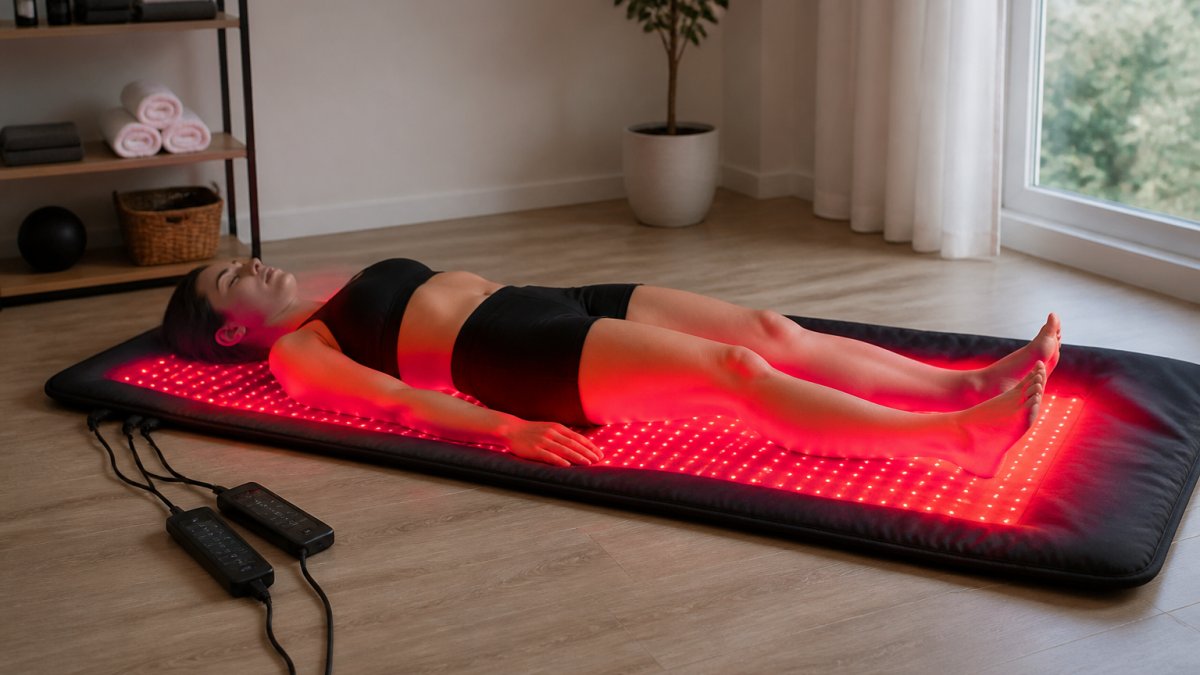
What Full-Body Red Light Therapy Bags Deliver
A full-body red light therapy bag is a wearable light therapy device designed to cover your entire body in a single session, combining red and near-infrared wavelengths for general wellness routines.

Full-body bags eliminate the need to move a light source around your body section by section. Most owners complete sessions in 10 to 15 minutes, which fits easily into a morning or evening routine.
The design is straightforward: unroll the mat, lie on it, set your power level and timer, and let the device run. Two separate controllers adjust the top and bottom halves independently. When finished, the bag rolls into a compact cylinder that fits in an included travel bag, making it genuinely portable compared to wall-mounted panels.
The Red Light Therapy Blanket with 660nm and 850nm dual wavelengths from Stack For Wellness features 13,536 LEDs: 4,512 red LEDs at 660nm and 9,024 near-infrared LEDs at 850nm. This combination delivers both surface-level and deeper light exposure.
Red Light Therapy Bag vs Panel: Key Differences
The choice between a full-body bag and a stationary panel depends on your space, session length, and routine. Both have distinct advantages.
Panels are tall, fixed installations that cover your entire front or back in one standing position. The Hooga ULTRA1500 panel is over three and a half feet tall with 300 quad-chip LEDs delivering four wavelengths (630nm, 660nm, 810nm, 850nm) across a 60-degree beam.

Bags let you lie down and receive full-body coverage without standing. The Red Light Therapy Blanket dimensions are 71 inches long by 27.5 inches wide, large enough to span from neck to feet.
| Feature | Full-Body Bag | Standing Panel |
|---|---|---|
| Setup | Unroll and lie down | Mount on wall, door, or stand |
| Session position | Lying flat | Standing or sitting |
| Typical session length | 10-15 minutes | 5-30 minutes |
| Portability | Rolls into travel bag | Requires wall mount or stand |
| Space requirement | Floor space (71" x 27.5") | Vertical wall or door space |
| Zone control | Two independent zones | Single or linked panels |
| LED count | 13,536 (Red Light Pro) | 300-480 (varies by model) |
Bags excel in small spaces and for people who prefer lying down during their session. Panels work better if you want to stand, move around, or treat specific areas of your body in longer sessions. Neither is objectively superior, it comes down to your recovery room layout and personal routine.
Understanding Red Light Therapy Bag Wavelengths
Red light and near-infrared light are different parts of the electromagnetic spectrum, and each plays a role in a complete session.
Red light sits at 630nm to 660nm. Near-infrared light ranges from 810nm to 850nm. Devices that deliver both together capture the full spectrum of light exposure examined in studies on light and wellness.
The Red Light Therapy Blanket uses 660nm red and 850nm near-infrared. The Hooga PRO1500 panel delivers 660nm red and 850nm near-infrared from every LED. The iReliev 2400W panel offers five wavelengths across three modes: red only, near-infrared at 810nm, or near-infrared at 830nm and 850nm combined.

Having options matters. Some people alternate between red-only and near-infrared-only sessions; others run both wavelengths together every time. Individual response varies widely, so a device that lets you choose gives you flexibility to experiment.
Wavelength is measured in nanometres (nm). Higher numbers (810-850nm) are often associated with deeper light exposure; lower numbers (630-660nm) with surface light exposure. The "best" wavelength depends on where you want to focus your sessions and what your personal experience tells you.
Red Light Therapy Bag Session Length and Frequency
Most full-body red light therapy bag owners run sessions between 10 and 15 minutes, reflecting what manufacturers recommend and what people report as sustainable and comfortable.
The Red Light Therapy Blanket offers timer settings of 5, 10, 15, or 30 minutes. Most users gravitate toward the 10- or 15-minute setting. A 5-minute session is too short to feel like a meaningful routine.
Frequency is a personal choice. Some people use their bag daily. Others use it three or four times per week. There's no universal prescription, consistency and personal preference drive results more than any single "optimal" frequency.
Starting with two to three sessions per week gives you time to observe how your body responds without overcommitting.
The key is building a routine you'll actually maintain. A 10-minute session you do every day beats a 30-minute session you attempt once and abandon.
How to Use a Red Light Therapy Bag Correctly
Using a full-body bag is straightforward, but a few practices make the experience more comfortable.
Unroll the blanket on a flat surface, a bed, yoga mat, or clean floor all work. Plug in both power supplies and keep the controllers within arm's reach.
Set your preferred power level (1 through 5) and timer duration (5, 10, 15, or 30 minutes).
Lie still during your session. Reading, meditation, or simply resting all work fine. The device shuts off automatically when the timer expires.
After your session, allow the LEDs to cool for a few minutes before rolling the blanket up. Store it in the included travel bag when not in use.
Red Light Therapy Blanket – Full Body Coverage | 660nm + 850nm Dual Wavelengths →
Eye protection is not required for bag use because you're lying underneath the light source, not facing it directly. However, if you're sensitive to bright light, closing your eyes during the session is perfectly fine.
Choosing the Right Full-Body Bag for Your Space
Space and budget are the two practical constraints when selecting a full-body red light therapy bag.
The Red Light Therapy Blanket measures 71 inches long by 27.5 inches wide. You need at least that much floor or bed space to use it comfortably.
Power requirements are minimal. The blanket draws standard 100-240V, 50-60Hz power, a regular household outlet works fine. You don't need special electrical installation. The two power supplies and controllers come in the box.
If you're building a cohesive recovery system, consider how a full-body bag complements other equipment.
The Red Light Therapy Blanket at $6,497 is a significant investment, but it's a one-time purchase with a one-year warranty. Compare this to the cost of visiting a wellness center repeatedly. Many people find that home equipment provides value through consistent use.
Building a Cohesive Recovery Routine
A single piece of equipment creates a foundation, but a cohesive system compounds the value of each component.
Start with your full-body red light therapy bag as your baseline. Use it consistently, three to five times per week for 10 to 15 minutes. This establishes a routine you can build on.
Add a second recovery tool that complements the bag. An infrared sauna serves a different function: heat-based relaxation versus light-based wellness.
At Stack For Wellness, we emphasize transparent specifications and cohesive system design.
The goal isn't to own every device. It's to choose two or three tools that fit your lifestyle and use them consistently.
Start small. Build your routine. Add equipment only when you've established consistency with what you have. This approach creates a recovery environment that actually works because it's sustainable.
This product is intended for general wellness and relaxation. It is not a medical device and is not intended to diagnose, treat, cure, or prevent any disease.
Frequently Asked Questions
How long should I use a full-body red light therapy bag each session?
Most owners use their full-body red light therapy bags for 10 to 15 minutes per session. The Red Light Therapy Blanket offers timer settings of 5, 10, 15, or 30 minutes. Start with 10 minutes at power level 2 or 3, then adjust based on your preference. Consistency matters more than session length, a 10-minute session you do daily beats a 30-minute session you use sporadically.
Can I use a full-body bag if I have limited space?
Yes. The Red Light Therapy Blanket is 71 inches long by 27.5 inches wide and rolls into a travel bag when not in use. You can use it on a bed, a yoga mat, or the floor. As long as you have roughly 6 feet of length and 2 feet of width available, you can accommodate a full-body bag. Storage takes up minimal space because the blanket rolls up compactly.
What's the difference between red light at 660nm and near-infrared at 850nm?
Red light at 660nm stays near the surface of your skin. Near-infrared light at 850nm travels deeper into tissue. Full-body red light therapy bags combine both wavelengths so your single session captures light exposure across different tissue depths. Some devices let you choose red-only or near-infrared-only modes, giving you flexibility to experiment with what works best for your routine.
How does a full-body bag compare to a standing red light panel?
Full-body bags let you lie down for 10-15 minute sessions and offer portability. Standing panels cover your front or back in a single position and support sessions up to 30 minutes. Panels work better if you want to stand during treatment or adjust positioning. Bags excel in small spaces and for people who prefer lying down. Neither is objectively better, choose based on your space, session preference, and recovery room layout.
How often should I use a red light therapy bag?
There's no universal prescription. Some people use their full-body red light therapy bags daily, while others use them three to four times per week. Start with two to three sessions per week to observe how your body responds, then adjust based on what fits your lifestyle. Consistency over weeks and months matters more than frequency in any single week.
Frequently Asked Questions
What is a full-body red light therapy bag?
A full-body red light therapy bag is a wearable or mat-style device that delivers red and near-infrared light across your entire body in a single session. Unlike smaller targeted panels, these bags cover 71 inches or more in length and use thousands of LEDs to emit specific wavelengths (typically 660nm red and 850nm near-infrared). They roll up for storage and travel, making them convenient for home use. Most sessions last 10 to 15 minutes, and the devices include built-in timers and adjustable power levels.
How do red light therapy bag wavelengths differ, and why does it matter?
Red light therapy bags typically combine two wavelengths: 660nm (red) and 850nm (near-infrared). Red light is often associated with surface light exposure, while near-infrared is associated with deeper light exposure. The Red Light Therapy Blanket we offer includes 4,512 LEDs at 660nm and 9,024 at 850nm, delivering both wavelengths simultaneously in every session. This dual-wavelength approach means you're not choosing between surface and deeper light exposure, you get both in one routine. Having more LEDs at 850nm reflects the design choice for deeper light exposure during full-body sessions.
How long should a typical red light therapy bag session be?
Most users run sessions between 10 and 15 minutes with full-body bags. The Red Light Therapy Blanket offers timer settings of 5, 10, 15, or 30 minutes, so you can start shorter and adjust based on personal preference. Consistency matters more than duration, regular shorter sessions fit better into daily routines than occasional longer ones. The device's two-zone controller lets you set different times for your upper and lower body if you prefer, giving you flexibility in how you structure each session.
Can you use a full-body red light therapy bag every day?
Full-body red light therapy bags are designed for regular home use. The Red Light Therapy Blanket, for example, is rated for home use only and includes a 1-year warranty. Daily sessions are common among users who integrate the bag into a morning or evening routine. Since sessions are short (10-15 minutes), adding one to your day takes minimal time. If you have specific health concerns or are taking medications that may interact with light exposure, consult a licensed healthcare provider before starting any new wellness routine.


