Is Home Recovery Equipment Worth the Investment
Table of Contents
- The Real Cost of Home Recovery Equipment
- Professional Recovery Equipment for Home Use: What Sets It Apart
- Home Recovery Equipment Electrical Requirements and Setup
- Infrared Sauna Technical Specifications and Long-Term Value
- Cold Plunge Chiller Maintenance and Hidden Costs
- Building a Cohesive Recovery Stack vs. Buying Piecemeal
- Is the Investment Right for Your Lifestyle
- Frequently Asked Questions
Last Updated: October 4, 2026
The Real Cost of Home Recovery Equipment
Is home recovery equipment worth the investment? The answer depends on your commitment level, available space, and how you plan to use it. What separates buyers who see consistent value from those who end up with expensive equipment gathering dust is honest assessment of usage patterns.
The upfront cost is real. But cost alone doesn't tell you whether the investment makes sense for your situation.
The real question is whether you'll use it consistently enough to justify the space and money. Most people overestimate their usage patterns and imagine daily sessions that never materialize. The equipment that delivers value is the equipment you actually use.
Professional Recovery Equipment for Home Use: What Sets It Apart
Professional-grade home recovery equipment differs from consumer alternatives in three measurable ways: build quality, technical specifications, and integration potential.
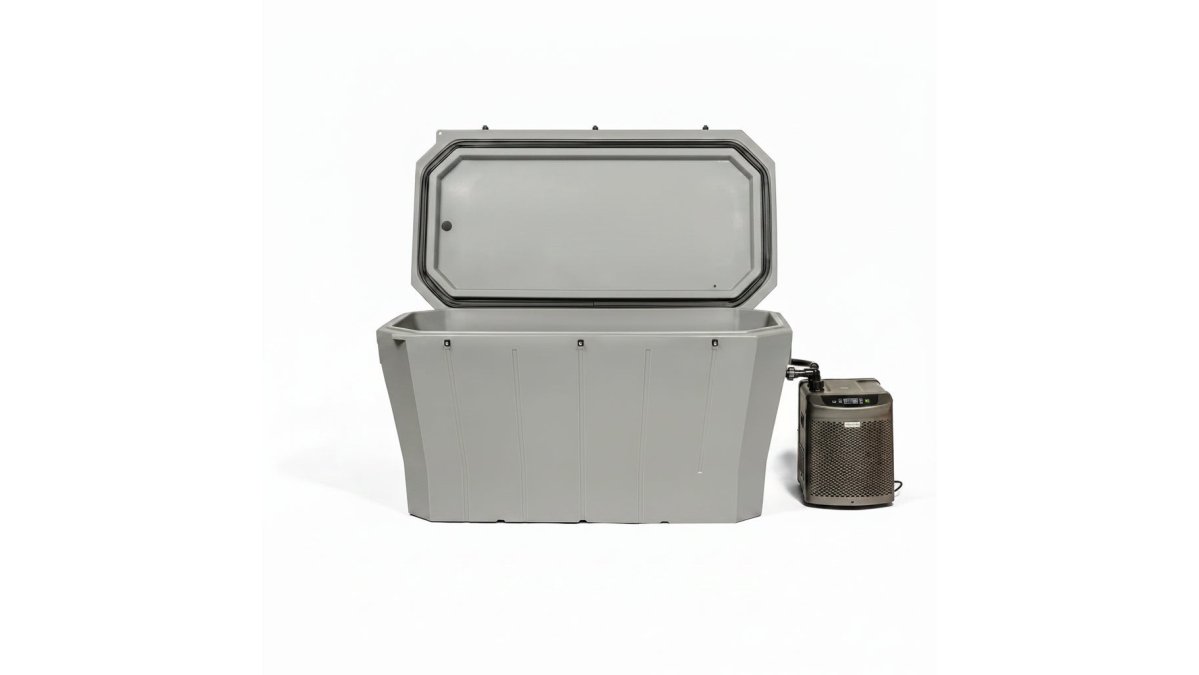
Build quality starts with materials. The 1-Person Red Cedar Far Infrared Sauna uses Canadian western red cedar throughout, not veneered, resisting warping in hot, humid conditions. The Modtub 2.0 Cold Plunge uses rotomolded LLDPE, the same material in kayaks, shaped specifically for human ergonomics.

Technical specifications matter more than marketing language. The Hooga ULTRA1500 light therapy panel fires four wavelengths, 630nm, 660nm, 810nm, and 850nm, from 300 quad-chip LEDs with a 60-degree beam angle that distributes light evenly. These are measurable specifications you can verify.
Integration potential separates cohesive systems from mismatched collections. When you select equipment designed to work together, a sauna on 120V, a cold plunge with a quarter-horsepower chiller in a 75-inch footprint, a massage chair requiring only wall clearance, you're building a recovery room. The RevX X-FLOW filtration system uses standard 1-inch barb fittings that connect to most cold plunge systems, automating water maintenance.
Home Recovery Equipment Electrical Requirements and Setup
Electrical capacity is the constraint most people overlook. The 1-Person Red Cedar Sauna draws 1,510 watts at 120V, requiring roughly 13 amps. The Silver Elite draws 1,400 watts from two 800-watt radiators. Neither can run through an extension cord or share an outlet. They need their own dedicated 15-amp circuit.
The Drift Inflatable Cold Plunge runs on standard 100-120V household power with no installation required. The Modtub 2.0 draws up to 4.7 amps from a standard outlet. Red light therapy panels like the Hooga PRO1500 and ULTRA1500 use standard US 3-prong plugs.

Massage chairs plug into standard outlets without special wiring or electrician required.
The practical constraint is circuit availability. For a dedicated recovery room, you need at least two circuits: one dedicated to the sauna, one for everything else. Most homes built in the last 30 years have spare circuits. Check your panel before ordering. If you need new circuits, hire a licensed electrician.
Infrared Sauna Technical Specifications and Long-Term Value
Infrared saunas come in two form factors: permanent cabins and portable tents. Each has different cost and space implications.
The 1-Person Red Cedar Sauna is a permanent installation: 35.5 inches square, 72.5 inches tall, 225 pounds. It assembles in 20-30 minutes without tools, plugs into 120V, and requires 3.9 inches of wall clearance. Eight low-EMF carbon heating panels wrap the body, with a heated marble floor and dual control panels (inside and outside). It fits a bedroom corner and stays put once installed.
The Silver Elite Sauna is portable: 18 pounds, sets up in one minute, packs into a carry bag. Two 800-watt radiators warm the space, but the tent fabric holds less heat than a rigid cabin, maxing out around 150°F. Sessions typically run 15-30 minutes.
Choose based on commitment and space. A permanent sauna signals you're building a recovery room; a portable sauna offers flexibility. Both use far infrared from ceramic chips, but the permanent cabin maintains temperature better and supports longer sessions.
Long-term value depends on session frequency. The 1-Person Red Cedar Sauna carries a one-year cabin warranty and seven-year heating panel warranty. The Silver Elite comes with a one-year warranty.
Maintenance is minimal: wipe the interior with a dry cloth after use, avoid soaps or cleaners, and ensure room ventilation in humid climates. The heating panels and sealed electrical components require no maintenance.
Cold Plunge Chiller Maintenance and Hidden Costs
Cold plunges have two ongoing costs: water treatment and chiller maintenance.
The Modtub 2.0 uses a 50-micron pleated filter, changed every 2-4 weeks depending on use. Between changes, add sanitizer to keep water clean. The quarter-horsepower chiller holds 37-39°F without ice.
The Drift Inflatable Cold Plunge includes an ozone system and water filter that run during circulation. The 1 HP chiller reaches 37.4°F. Two spare filters are included. The system is more automated than the Modtub, reducing chemical use and manual maintenance.
The RevX X-FLOW filtration system is an inline cabinet with a 200W pump, 18W UV-C lamp, and 20-micron filter, circulating 720 gallons per hour. The UV-C lamp reduces chemical dosing significantly, and the pump heat sink cuts chiller load. Filter cartridges last 2-4 weeks.
M9 3D Full Body Massage Chair →
The RevX automates water treatment, paying for itself within a year with regular use.
Filled, the Modtub weighs 850 pounds and the Drift weighs about 670 pounds. Both require a floor rated for the load. Check your floor's load rating before ordering.
Building a Cohesive Recovery Stack vs. Buying Piecemeal
The difference between a recovery room and a collection of equipment is intentional design. When you select products that share electrical requirements, fit your space, and complement each other's function, you build a system. Buying piecemeal results in mismatched specs and conflicting footprints.
A cohesive stack works like this: sauna for heat and relaxation, cold plunge for contrast and a post-workout routine, red light therapy for sessions between hot and cold, and a massage chair for use between intense sessions. Each piece serves a distinct function, and the sequence matters.
Buying piecemeal means you might choose incompatible electrical requirements, conflicting footprints, and weight limits your floor can't handle. You end up with equipment that technically works but doesn't integrate.
Mismatched equipment is the most common reason people abandon their recovery investment. The products we carry are selected to work together: compatible electrical requirements, complementary footprints, integrated filtration and controls where applicable.
Example: The 1-Person Red Cedar Sauna (35.5" square), Modtub 2.0 Cold Plunge (75" footprint including chiller), and M9 3D Massage Chair (69" reclined) fit in a 15' x 12' room. Electrical: one dedicated 15-amp circuit for sauna, one standard outlet for everything else. Routine: sauna, cold plunge, massage chair recovery.

Buying from different retailers without attention to compatibility can result in incompatible electrical requirements, conflicting footprints, and equipment that doesn't fit your space.
Is the Investment Right for Your Lifestyle
Home recovery equipment is worth the investment if you meet three conditions: you have the space, you'll use it consistently, and you understand the maintenance commitment.
Space: A sauna needs 35-40 square feet, a cold plunge needs 75 linear inches, a massage chair needs 70 inches of length when reclined plus 4 inches of wall clearance. Measure your actual space. Saunas work best between 50°F and 75°F ambient temperature; unheated garages in winter require more chiller power.
Consistency: Most people overestimate usage frequency. If you currently visit a gym or spa three times a week, you might sustain that at home. If you go once a month, a home setup won't change your behavior. Equipment delivers value only if you use it at least twice a week.
Maintenance: Cold plunges need water management, saunas need occasional cleaning, massage chairs need upholstery care, and red light panels need dust management. Budget 10 minutes per week for maintenance.
If you meet those three conditions, the investment makes sense. If you don't, it doesn't, regardless of how much disposable income you have.
This product is intended for general wellness and relaxation. It is not a medical device and is not intended to diagnose, treat, cure, or prevent any disease.
Frequently Asked Questions
What's the actual ROI on home recovery equipment compared to spa visits?
The math depends on your current routine. A cold plunge or infrared sauna can be a significant investment. The real advantage emerges when you combine equipment into a cohesive recovery stack, allowing for consistent use of complementary tools in your own space. This assumes consistent use, not occasional sessions.
Do I really need professional-grade recovery equipment for home use, or is consumer gear enough?
Professional-grade equipment differs in three ways: specification transparency, material durability, and integration design. Professional equipment like the Modtub 2.0 cold plunge specifies its quarter-horsepower chiller, 3,010 BTU cooling capacity, and 50-micron filtration upfront. The 1-Person Red Cedar Far Infrared Sauna lists eight low-EMF carbon panels and a heated marble floor. This transparency lets you verify what you're buying.
What are the hidden costs of owning a cold plunge or sauna at home?
Beyond the purchase price, expect water treatment, filtration, and electricity. A cold plunge requires filter cartridge changes every 2-4 weeks and occasional UV-C lamp replacement. Electricity varies by unit, the 1-Person Red Cedar Sauna draws 1,510 watts. The Drift Inflatable Cold Plunge's 1 HP chiller also uses electricity. These costs are manageable but should factor into your budget.
How much space do I actually need for a home recovery setup?
A minimal setup fits a small room or corner. The 1-Person Red Cedar Sauna occupies 35.5 inches square (roughly 9 square feet). The Modtub 2.0 cold plunge needs about 75 inches of length with the chiller beside it. A massage chair like the M9 requires 69 inches of floor length when reclined and 3.9 inches of wall clearance. A red light therapy panel hangs on a door or wall. A compact recovery corner, sauna, cold plunge, and massage chair, needs 150-200 square feet. Apartment dwellers can use the portable Silver Elite Sauna (folds into a carry bag) and the Drift Inflatable Cold Plunge (34 lb, packs away). Space constraints are real but not insurmountable with the right equipment selection.
Meta Title: Is Home Recovery Equipment Worth the Investment | Stack For Wellness
Meta Description: Evaluate whether home recovery equipment justifies the cost. Learn about electrical requirements, maintenance, space needs, and how to build a cohesive recovery system that actually gets used.