


How to Maintain Infrared Sauna Wood: A Complete Guide
Table of Contents
- Why Infrared Sauna Wood Maintenance Matters
- How to Clean an Infrared Sauna After Each Session
- Infrared Sauna Cleaning Schedule: Routine and Seasonal Care
- Choosing the Right Sauna Wood Cleaner for Your Cabin
- Drying and Ventilation: Preventing Mold and Odor
- Using Sauna Wood Sealant and Oil for Long-Term Protection
- Troubleshooting Common Wood Issues: Stains, Odor, and Mold
- Frequently Asked Questions
- Frequently Asked Questions
Last Updated: October 12, 2026
Why Infrared Sauna Wood Maintenance Matters
Your infrared sauna cabin is built from wood. Cedar, hemlock, or other softwoods are chosen for their stability in hot, dry environments. But wood needs care.

At Stack For Wellness, we help customers build complete recovery systems. An infrared sauna is a centerpiece investment. Protecting that investment means understanding how to maintain the wood properly. The good news: it's straightforward.
This guide covers everything you need to know about how to maintain infrared sauna wood. We'll walk you through cleaning routines, safe products, drying techniques, and troubleshooting common issues.
How to Clean an Infrared Sauna After Each Session
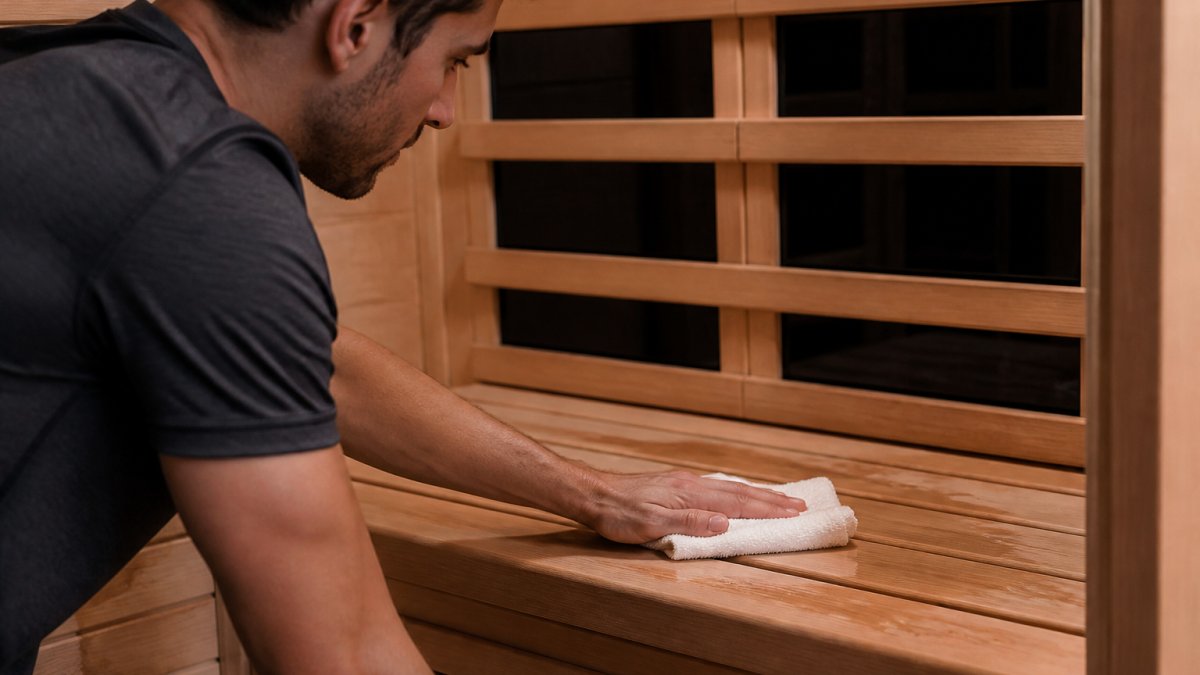
Cleaning your sauna after each use is the foundation of good wood maintenance. Sweat and body oils sit on wooden surfaces and attract dust. Left untreated, they create buildup that becomes harder to remove over time. A quick wipe-down takes five minutes and prevents almost all common wood problems.
Removing Sweat, Dust, and Body Oils
Start with a soft cloth. Microfiber works best because it captures sweat and oils without scratching the wood. Wipe down all interior surfaces: benches, backrests, walls, and ceiling. Pay special attention to corners where moisture collects.
For dust and loose debris, use a soft-bristled brush or a handheld vacuum with a brush attachment. Brush along the wood grain, not against it. This removes particles that settle during and after your session without damaging the finish.
Many people ask whether to wipe immediately after stepping out or wait a few minutes. Wipe while the wood is still warm. Warm wood absorbs moisture better, and oils lift more easily.
Using Water, Vinegar, and Mild Cleaning Solutions
Plain water works for routine cleaning. Use a damp cloth, not soaking wet. Excess water can soak into wood and cause swelling or warping. Wring out your cloth so it's barely moist, then wipe surfaces clean.
For stubborn buildup, white vinegar is safe and effective. Mix one part white vinegar with three parts water. Dip your soft cloth in the solution and wipe affected areas. Vinegar cuts through oils and mineral deposits without harsh chemicals.
Never use harsh cleaners, bleach, or abrasive scrubbers inside your sauna. These can strip finishes, damage wood fibers, and leave chemical residues that off-gas when heated. Stick to gentle solutions.
Infrared Sauna Cleaning Schedule: Routine and Seasonal Care
A good maintenance schedule prevents problems from building up. Think of it as three tiers: daily, weekly, and seasonal. You don't need to do everything every time. Match the schedule to your use level.
Daily (after each session):
- Wipe benches and backrests with a soft cloth
- Remove visible sweat and dust
- Leave the door open to air out
Weekly (if using 3+ times per week):
- Wipe all interior surfaces including walls and ceiling
- Check corners and window sills for moisture or dust
- Inspect the floor for debris
Monthly:
- Vacuum or brush the entire interior thoroughly
- Wipe down the glass door and frame
- Check for any stains or odor developing
Seasonal (every 3-4 months):
- Deep clean all surfaces with a soft brush
- Inspect the wood for any damage or discoloration
- Consider applying protective oil treatment if the wood looks dry
If you use your sauna less frequently (once or twice a week), you can extend the weekly tasks to every other week. The key is consistency. Regular light cleaning prevents the need for heavy scrubbing later.
Choosing the Right Sauna Wood Cleaner for Your Cabin
Not all cleaners are safe for sauna wood. Your cabin is built from softwood like cedar or hemlock. These woods are chosen because they're stable in heat and naturally aromatic. They're also more delicate than hardwoods. The wrong cleaner can strip the finish or damage the grain.
Safe Cleaning Products for Cedar and Hemlock
Stick with these proven options:
- Water and soft cloth, the safest, most effective daily method
- White vinegar solution, one part vinegar, three parts water for mild buildup
- Wood soap, specially formulated for unfinished or lightly finished wood; use sparingly and rinse well
- Hydrogen peroxide, a 3% solution works for light stains; test on an inconspicuous area first
Always test any new product on a hidden spot inside the cabin before using it on visible surfaces. Wood finishes vary between manufacturers. What works on one cabin might affect another differently.
Avoiding Harsh Chemicals and Damage
Never use these inside your sauna:
- Bleach or chlorine-based cleaners
- Abrasive scrubbers or steel wool
- Oil-based furniture polish or wax
- Harsh chemical degreasers
- Acidic cleaners beyond diluted vinegar
These products can strip finishes, damage wood fibers, leave residues that off-gas when heated, or create slippery surfaces. Your cabin's wood is already treated to handle moisture. It doesn't need additional coatings or aggressive cleaning.
Drying and Ventilation: Preventing Mold and Odor
Moisture is the enemy of wood. Even though your sauna is designed to handle heat and humidity, standing water or trapped moisture creates conditions for mold and musty odors.
After cleaning, leave the cabin door open for at least 30 minutes. This allows moisture to escape and air to circulate through the interior.
In humid climates or during rainy seasons, consider running a small dehumidifier in the room where your sauna sits.
1-Person Red Cedar Far Infrared Sauna with Bluetooth →
Never close the sauna door immediately after a session. Trapped moisture can condense on cooler surfaces and soak into wood. Leave it open until the interior is completely dry to the touch.
Using Sauna Wood Sealant and Oil for Long-Term Protection
Over time, wood naturally loses moisture and can look dull or dry. To maintain infrared sauna wood properly, protective oil treatments restore appearance and protect the grain. These are optional but recommended if your cabin sees heavy use or if you live in a very dry climate.

Paraffin Oil and Food-Grade Mineral Oil Options
Paraffin oil is the traditional choice for sauna wood. It's food-safe, odorless, and doesn't off-gas when heated. It penetrates the wood grain and provides a protective barrier against moisture and stains. Food-grade mineral oil works similarly and is equally safe.
Never use linseed oil or other vegetable oils. These can go rancid, especially in the warm environment of a sauna. Stick to paraffin or food-grade mineral oil.
Apply oil sparingly. Use a soft cloth to wipe a thin coat over all wood surfaces. Let it absorb for 15 to 20 minutes, then wipe away any excess.
When and How to Apply Protective Treatments
Apply oil every 6 to 12 months, depending on use and climate. If you use your sauna 3+ times per week, treat it every 6 months. Light users can stretch to 12 months. In very dry climates, wood dries faster and may need treatment more often.
The best time to apply oil is after a deep cleaning. Make sure the wood is completely dry first. Apply in thin, even coats. One light coat is better than one heavy coat. Let it dry for at least 24 hours before using the sauna again.
Troubleshooting Common Wood Issues: Stains, Odor, and Mold
Even with regular maintenance, issues sometimes develop. Here's how to handle the most common problems.
White or gray stains: These are usually mineral deposits from sweat or water.
Dark stains or discoloration: These can be mold, mildew, or tannin leaching from the wood.
Musty or sour odor: This indicates trapped moisture. Increase ventilation immediately.
Loose or warped boards: Minor warping is normal as wood adjusts to temperature and humidity changes.
Cracks in the wood: Small surface cracks are cosmetic and common in softwoods. They don't affect function.
Maintaining your infrared sauna wood is simple when you follow a routine.
Stack For Wellness offers several infrared sauna models built from premium cedar and hemlock. The 1-Person Red Cedar Far Infrared Sauna with Bluetooth features Canadian red cedar and eight low-EMF heating panels, making it an excellent choice for home recovery. For larger spaces, the Infrared Sauna Built for Deep Heat Therapy, 6-Person Cedar, 10 Carbon Heaters, Ultra-Low EMF Design provides seating for multiple people while maintaining the same commitment to quality wood and transparent specifications.
This product is intended for general wellness and relaxation.
Frequently Asked Questions
How often should I clean the interior of my infrared sauna?
After each session, wipe down benches and backrests with a soft cloth to remove sweat and dust. If you use your sauna 3 or more times per week, do a more thorough cleaning of all interior surfaces weekly. Light users can extend this to every other week. Monthly, vacuum or brush the entire interior and inspect for any developing issues.
Can I use regular household cleaners inside my sauna?
No. Avoid bleach, harsh degreasers, abrasive scrubbers, and chemical polishes. These can strip finishes, damage wood, and leave residues that off-gas when heated. Stick to water, white vinegar diluted with water, or wood-safe cleaners. Always test any new product on a hidden area first.
What should I do if my sauna smells musty?
Musty odor usually means moisture is trapped inside. Leave the door open longer after each session to allow air circulation. Run a dehumidifier in the room if you live in a humid climate. If the smell persists, check corners and under the bench for mold using a flashlight. A 3% hydrogen peroxide solution clears surface mold. If the odor doesn't improve after a week of increased ventilation, contact the manufacturer.
How do I apply protective oil to my sauna wood?
Use paraffin oil or food-grade mineral oil. Apply every 6 to 12 months depending on use. Make sure the wood is completely dry first. Use a soft cloth to apply a thin, even coat to all interior surfaces. Let it absorb for 15 to 20 minutes, then wipe away excess. The wood should look slightly darker but not slick or oily. Wait 24 hours before using the sauna again.
What causes white stains on sauna wood?
White or gray stains are usually mineral deposits from sweat or water buildup. Mix one part white vinegar with three parts water and apply with a soft cloth. Wipe clean and dry thoroughly. If the stain persists, make a paste of baking soda and water, apply it, let it sit for 10 minutes, then wipe away. Most mineral stains come off with these gentle methods.
Frequently Asked Questions
How often should you clean an infrared sauna?
Wipe benches and interior surfaces with a soft cloth after every session to remove sweat and body oils. Perform a deeper clean weekly, checking vents and glass doors. Monthly, inspect for any stains or odor buildup, and address them promptly. If your sauna sees heavy use, increase weekly cleaning frequency. Light use, once or twice weekly, allows for standard monthly maintenance. Always follow your manufacturer's care instructions.
Can you use vinegar to clean infrared sauna wood?
Yes, white vinegar is a safe, mild cleaning solution for infrared sauna wood. Mix equal parts white vinegar and water in a spray bottle, lightly mist the surfaces, and wipe with a soft cloth. Vinegar cuts through sweat and body oil residue without damaging cedar or hemlock. Avoid soaking wood or letting vinegar pools sit on benches; always wipe dry immediately after cleaning. For stubborn stains, let the vinegar solution sit for a few minutes before wiping. Never use vinegar on glass doors or electronic panels, use a damp microfiber cloth instead.
Should you seal or oil infrared sauna wood?
Yes, applying protective oil helps maintain wood longevity in the heated, humid sauna environment. Food-grade mineral oil or paraffin oil are both safe choices for infrared sauna interiors. Apply oil every 3 to 6 months, depending on use frequency and wood condition. Use a soft cloth to apply a thin, even coat to benches, backrests, and walls. Allow the oil to absorb for 15 to 20 minutes, then wipe away excess. Avoid commercial wood sealants or polyurethane finishes, which can off-gas in high heat. Always consult your sauna's manual.
How do you prevent mold in an infrared sauna?
Mold thrives in warm, damp environments, so ventilation and drying are critical. After each session, crack the door open for at least 30 minutes to allow moisture to escape. Ensure your sauna's vents are clear and unobstructed, check them weekly. Wipe all surfaces dry with a soft cloth before closing the cabin. If you notice musty odors or visible mold, increase ventilation time, reduce session frequency temporarily, and clean affected areas with a vinegar-and-water solution. In humid climates, consider running a small fan nearby during cool-down periods. Never seal the cabin immediately after use; moisture must escape to prevent mold growth.


