


Top Shelf Health Solutions Alternative: Home Recovery Comparison
Table of Contents
- Why Professional Recovery Equipment for Home Use Matters
- Infrared Sauna Technical Specifications: What to Compare
- Comparing Sauna Options: Features and Electrical Needs
- Cold Plunge Chiller Horsepower Comparison and Selection
- Home Wellness Room Layout Planning and Space Requirements
- Cost-Effectiveness and Long-Term Value
- Implementation Timeline and Setup Expectations
- Frequently Asked Questions
- Frequently Asked Questions
Last Updated: October 8, 2026
Why Professional Recovery Equipment for Home Use Matters
Building a cohesive home recovery environment changes how consistently you can prioritize wellness. Most people buy one piece of equipment, a sauna, a cold plunge, a massage chair, only to find it collects dust because the setup feels incomplete.
The difference between mismatched equipment and a unified recovery stack is significant.
Professional-grade recovery equipment for home use isn't about luxury, it's about removing friction.
Infrared Sauna Technical Specifications: What to Compare
An infrared sauna uses infrared heaters to emit radiant heat, which is absorbed directly by the body rather than heating the surrounding air. The specifications that matter most are heater type, wattage, warm-up time, and materials.
Heater type determines how evenly heat distributes and how quickly the sauna reaches temperature. Ceramic semiconductor chips, used in portable models like the Relax Silver Elite, deliver the same heat output in a more compact form factor.
Wattage directly affects warm-up time and operating cost. Fixed cabins may use 120V or 220V and can draw higher amperage, which is why circuit planning matters, a 1,510-watt cabin like the SalusHEAT Sublime-901BR needs its own dedicated 15-amp circuit.
Wood material affects durability, aesthetics, and scent. Canadian red cedar is naturally stable in humid environments and resists warping in the heat-dry cycle of sauna use; Canadian hemlock is similarly stable and slightly denser.
Portable vs. Fixed Cabin Models
Portable saunas fold into a carry bag and set up on any floor in minutes. The Relax Silver Elite at $1,700 and the Relax Black Pro at $2,300 are both portable options; the Black Pro uses a thicker, silver-lined tent that warms faster and retains heat longer, making it suitable for daily use or professional settings running 15 to 20 sessions per day.
Fixed cabins stay in one place. The SalusHEAT Sublime-901BR at $2,289 is a one-person fixed cabin with eight heating panels, a heated marble floor, and dual LCD controls. The Durasage 2-Person at $3,295 accommodates two people and reaches 140°F in 10 to 15 minutes.
Your choice depends on space permanence and frequency of use. If you rent, move frequently, or want flexibility, portable is practical. If you're building a dedicated recovery room and plan daily use, a fixed cabin provides a more integrated experience.
Heater Type and Wattage
Carbon and ceramic heaters both deliver far infrared. Carbon panels are distributed across multiple zones, front, back, shoulders, legs, so heat comes from every direction.
Wattage should match your circuit capacity and warm-up expectations. A 1,400-watt sauna is appropriate for a standard 15-amp outlet; a 1,700-watt model requires dedicated circuit planning.
Warm-up time ranges from 1 minute for portable units. A quick portable sauna fits a 15-minute break; a fixed cabin suits longer, more deliberate sessions.
Comparing Sauna Options: Features and Electrical Needs
Stack For Wellness carries five infrared sauna models spanning portable and fixed designs.
| Model | Type | Capacity | Wattage | Circuit Requirement | Price |
|---|---|---|---|---|---|
| Silver Elite | Portable | 1 person | 1,400 W | Standard 120V outlet | $1,700 |
| Flex Lie Down | Portable | 1 person | 1,400 W | Standard 120V outlet | $1,700 |
| Black Pro | Portable | 1 person | 1,400 W | Standard 120V outlet | $2,300 |
| SalusHEAT Sublime-901BR | Fixed cabin | 1 person | 1,510 W | Dedicated 15-amp circuit | $2,289 |
| Durasage 2-Person | Fixed cabin | 2 people | 1,700 W | Standard 120V outlet | $3,295 |
Single-Person Saunas
Single-person models are ideal for individuals or couples who take turns. The Silver Elite and Flex Lie Down both cost $1,700 and use the same 1,400-watt dual radiator system; the difference is posture.

The SalusHEAT Sublime-901BR is a fixed cabin with eight carbon panels and a heated marble floor. It reaches about 150 °F and includes two Bluetooth speakers, chromotherapy lighting, and dual controls. At $2,289, it works well in a dedicated home gym or bedroom corner.
Two-Person Cabins
The Durasage 2-Person at $3,295 is one of the two-person options in the Stack For Wellness lineup. It uses six carbon panels and reaches 140 °F in 10 to 15 minutes. The 1,700-watt heater runs from a standard 120V outlet. It includes wireless audio, USB input, FM radio, and chromotherapy LED lighting.
A two-person cabin is worthwhile if you and a partner both use saunas regularly or if you plan to host guests. It justifies the footprint (47.6" wide, 41.7" deep, 74.4" high) and the $3,295 investment.
Cold Plunge Chiller Horsepower Comparison and Selection
A cold plunge chiller maintains water temperature, typically between 45 °F and 60 °F, for immersion sessions.
Horsepower ratings range from 0.5 HP for small portable units to 2+ HP for large fixed installations.
For a home recovery room, 1 to 1.5 HP is typical, balancing cost, energy consumption, and performance.
Chiller placement matters.
When selecting a chiller, confirm the plunge volume in gallons and match it to the chiller's cooling capacity.
Home Wellness Room Layout Planning and Space Requirements
A recovery room doesn't require a dedicated space, it requires planning. Most people integrate a sauna, cold plunge, and other equipment into an existing spare bedroom, basement, garage, or home gym.
Footprint and Wall Clearance
The Silver Elite has a 32" by 33" footprint. The Flex Lie Down has a 65" by 26" tent and a 78" by 36" mat; allow room for the full mat and manufacturer-required clearance.

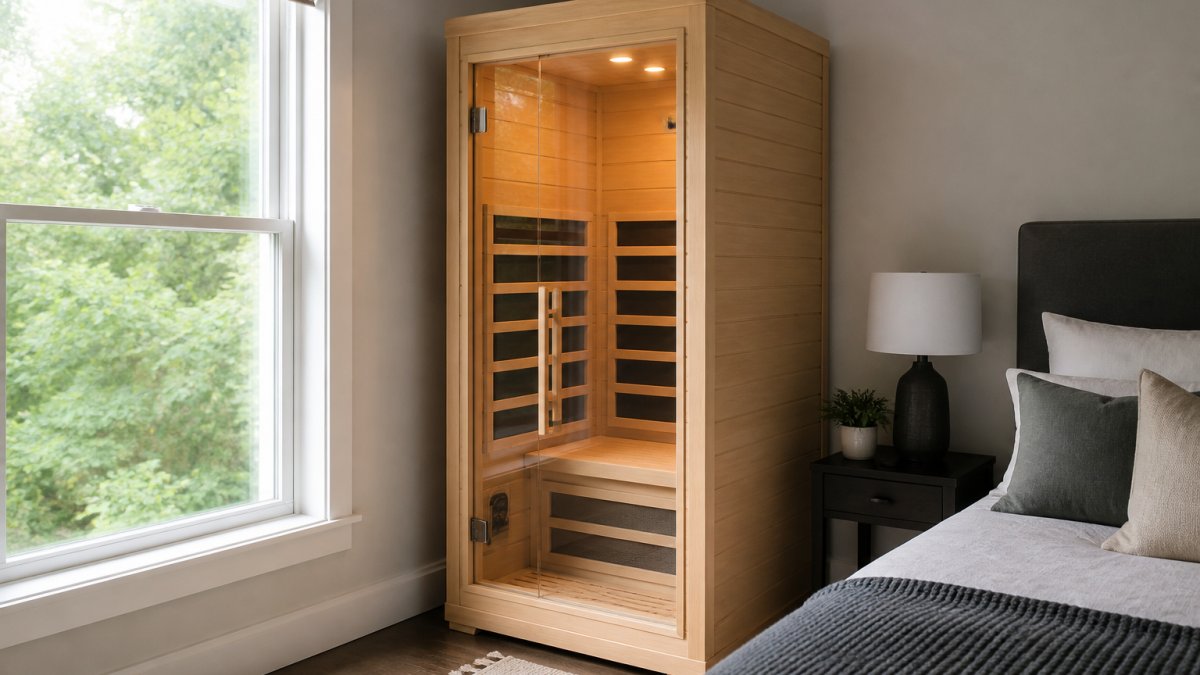
Fixed cabins require more planning. The SalusHEAT Sublime-901BR is 35.5" square, fitting a bedroom corner or a 5-by-5-foot space.
A cold plunge typically occupies 4 feet by 8 feet of floor space, depending on the unit.
Flooring matters. Saunas and cold plunges are water-adjacent; concrete or sealed tile is ideal. Carpet can work with protective mats underneath, but wood floors risk water damage over time.
Electrical Circuit Planning
Before buying, verify your electrical panel has available capacity.
A portable 1,400-watt sauna plugs into any standard 120V outlet. A fixed cabin drawing 1,510 watts needs a dedicated 15-amp circuit, meaning nothing else plugs into that outlet.
A cold plunge chiller drawing 1,500 to 2,000 watts also needs its own circuit or shared capacity with low-draw devices only.
If your panel has no available circuits, you'll need an electrician to add one, costing $300 to $800 depending on distance and complexity. Budget for it upfront.
Ventilation and Room Conditions
Saunas and cold plunges raise humidity and temperature in a room. Ventilation prevents mold and keeps the space comfortable.
A portable sauna vents naturally through its fabric tent.
Ambient room temperature affects both sauna warm-up time and chiller performance.
Humidity control is simple: run a dehumidifier if moisture builds up, or ensure the room has a window that opens. Most home recovery setups don't require sophisticated ventilation.
Cost-Effectiveness and Long-Term Value
The upfront cost of a sauna or cold plunge is real, but long-term value depends on usage consistency and how well the equipment integrates into your routine.
A portable sauna at $1,700 to $2,300 is accessible for individual use. A fixed cabin at $2,289 to $3,295 is a larger commitment but creates a more permanent recovery environment that encourages daily use.

The real value emerges when you use the equipment regularly.
Warranty coverage matters. Warranty coverage varies by model and component; check the manufacturer's current cabin and heater terms before ordering.
Implementation Timeline and Setup Expectations
Portable saunas arrive ready to use. Unbox, unfold, plug in, and start a session within 10 minutes.
Fixed cabins take longer. The Durasage 2-Person uses a buckle system and takes about 15 minutes with two people.
Cold plunge installation depends on the model.
Electrical work is the variable. If you need a new circuit, schedule an electrician before equipment arrives.
This product is intended for general wellness and relaxation.
Frequently Asked Questions
What's the difference between portable and fixed infrared saunas?
Portable saunas fold into a carry bag and plug into any standard outlet. They warm up in 1 to 15 minutes and work anywhere, bedroom, living room, garage. Fixed cabins stay in one place, warm more slowly (25 to 60 minutes), and include built-in audio, lighting, and comfort features. Choose portable if you value flexibility; choose fixed if you're building a dedicated recovery room and plan daily use.
Do I need a dedicated electrical circuit for a sauna?
Portable 1,400-watt saunas plug into standard outlets and don't require a dedicated circuit. Fixed cabins drawing 1,510 to 1,700 watts should have their own 15-amp circuit to avoid overloading shared outlets. Check your electrical panel before buying. If no circuits are available, hiring an electrician to add one costs $300 to $800.
How much space do I need for a home recovery room?
Portable sauna dimensions vary: the Silver Elite has a 32" by 33" footprint, while the Flex lie-down model needs room for its larger tent and mat. Fixed one-person cabins like the SalusHEAT fit a 35.5" square footprint, a bedroom corner works fine. Two-person cabins are larger at 47.6" wide. Cold plunges typically need 4 feet by 8 feet. Most home recovery setups fit into an existing room: spare bedroom, basement, or garage.
What's the best sauna for someone new to saunas?
The Silver Elite at $1,700 is the entry point. It's portable, warms in about a minute, and plugs into any outlet. You can try it without major commitment, and if saunas aren't for you, it packs away. If you prefer lying down over sitting, the Flex Lie Down at the same price is equally accessible. Both use the same heating technology as pricier models.
How long does it take to assemble a fixed sauna cabin?
The SalusHEAT Sublime-901BR takes 20 to 30 minutes with no tools required. The Durasage 2-Person takes about 15 minutes with two people using a buckle system. Both arrive in cartons and require no wiring or installation work. Plan a weekend afternoon for setup and testing.
When you're building a home recovery environment, the difference between success and abandonment is clarity.
Frequently Asked Questions
What should I look for when comparing infrared sauna technical specifications?
Focus on heater type (carbon panels vs. ceramic), total wattage, warm-up time, and maximum temperature. For home recovery equipment, also check the wood material (cedar or hemlock for durability), EMF ratings, and whether the unit is portable or fixed. Verify electrical requirements: most home saunas run on standard 120V outlets, but some require 15-amp dedicated circuits. Compare warranty terms and assembly time.
How do I determine the right size for a home wellness room?
Measure your available space first. Portable saunas like the Silver Elite need about 32 inches by 33 inches of floor space, while cabin models like the 1-Person Red Cedar require 35.5 inches square. Account for wall clearance: allow at least 6 inches on each side for ventilation and access. If you plan a multi-equipment room, map out each piece's footprint, then add 18-24 inches of walking space between items. Check ceiling height, most cabins need 72+ inches. Verify your electrical panel can support the equipment's draw without overloading existing circuits.
What are the electrical requirements for professional-grade home recovery equipment?
Most infrared saunas draw between 1,400 and 1,700 watts and plug into standard 120V household outlets. However, units above 1,500W (like the SalusHEAT Sublime at 1,510W) need their own dedicated 15-amp circuit. Never run these devices through extension cords or power strips. If you're building a full recovery stack with multiple pieces, consult an electrician to ensure your home's electrical panel can handle the total load. Portable models offer flexibility since they use standard outlets, while fixed cabins may require circuit upgrades.
How do portable and fixed sauna cabins compare for home use?
Portable saunas (like the Silver Elite or Black Pro) fold into carry bags, require no installation, and run from any 120V outlet. They warm up in about one minute and store in a closet when not in use. Fixed cabins (like the 1-Person Red Cedar or 2-Person Hemlock) take 20-30 minutes to assemble, stay permanently in place, and offer more robust construction with wood cabins. Portables suit renters and those with limited space; cabins suit homeowners wanting a dedicated wellness room. Both deliver far infrared heat in the same wavelength range (7-14 microns), so the choice depends on your space, lifestyle, and budget.


