Is Professional Recovery Equipment Worth It? 2026 Guide
Table of Contents
- What Counts as Professional Recovery Equipment for Home Use
- The Real Cost of Professional Recovery Equipment
- Infrared Sauna Health Benefits: What the Research Supports
- Cold Plunge vs. Ice Bath Recovery: Why Temperature Control Matters
- Long-Term Value: Compounding Results vs. One-Off Purchases
- Common Mistakes When Buying Recovery Equipment
- Frequently Asked Questions
Last Updated: September 20, 2026
What Counts as Professional Recovery Equipment for Home Use
Professional recovery equipment is gear built to commercial specifications, with published performance data, serviceable parts, and a warranty that assumes daily use. Whether it is worth it comes down to one variable: whether you will use it enough for the build quality to matter.
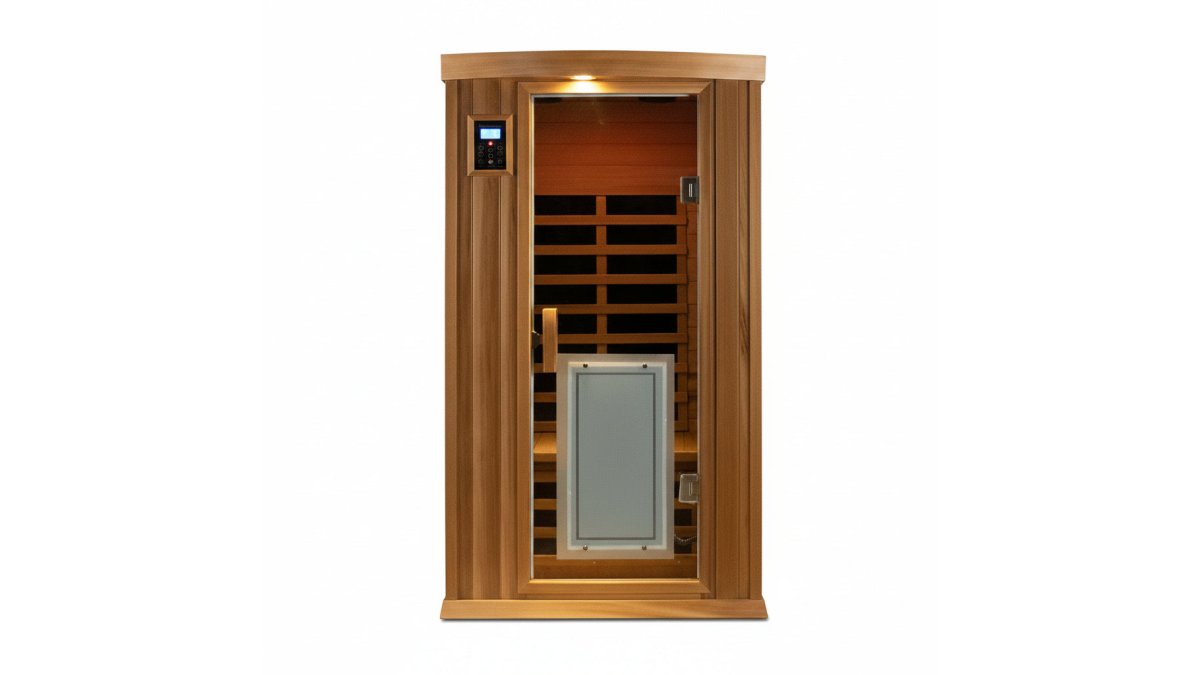
The category breaks into four types:

- Infrared saunas, rated by heater count, heater placement, wood species, and EMF output
- Cold plunges, rated by chiller capacity, achievable temperature range, and insulation
- Red and near-infrared light panels, rated by LED count, wavelength, and irradiance at distance
- Massage chairs, rated by roller mechanism, track type, and body-scan accuracy
Consumer-Grade vs. Professional-Grade: The Specs That Matter
A consumer-grade unit hides its specifications. A professional-grade unit leads with them.
The Real Cost of Professional Recovery Equipment
Professional-grade home equipment costs more up front and less per session over time, but only if you run the math honestly instead of assuming daily use.
| Category | What Decides Quality | What Cheap Units Skip | Typical Price Band |
|---|---|---|---|
| Infrared sauna | Heater count and placement, wood species, EMF rating | Heater count, EMF disclosure | $2,000-$3,000 |
| Cold plunge | Chiller capacity, temperature hold, insulation | Real chiller, insulated lid | $3,000-$3,500 |
| Light panel | LED count, dual wavelength, housing material | LED count, aluminum housing | $1,500-$1,600 |
| Massage chair | Roller depth, track type, body scan | 3D rollers, SL-track | $2,500-$2,600 |
Pricing Breakdown: What You Pay and What You Get
Stack For Wellness prices its four core units between $1,539 and $3,199, and the spread tracks component cost.
Running the Break-Even Math
The honest way to decide is to compare sticker price against what you currently spend on the same stimulus outside the home.
- Sauna. A studio infrared session commonly runs $30 to $60. At four sessions a week, that is roughly $6,000 to $12,000 a year. A $2,289 sauna pays for itself in the first few months of that routine, and the operating cost after that is electricity.
- Cold plunge. Contrast-therapy studios and recovery clubs typically charge $30 to $80 per visit. A $3,199 chiller-equipped plunge breaks even somewhere around 40 to 100 visits, depending on your local rate.
- Light panel. A clinic red light session is often $50 to $150. A $1,539 full-back panel used daily clears that in weeks, not years.
- Massage chair. A 60-minute therapeutic massage commonly runs $80 to $120 plus tip. At two sessions a month, a $2,569 chair reaches break-even in roughly a year.
The Costs the Sticker Price Hides
Professional-grade gear carries ownership costs consumer-grade gear does not:
- Electrical. A quarter-horsepower chiller and a sauna running at the same time can exceed a single 15-amp circuit.
- Water and drainage. A plunge needs filling, topping off, and periodic draining.
- Filters and consumables. A 50-micron pleated filter is a recurring line item, not a one-time purchase.
- Floor reinforcement. An 850 lb filled plunge on a second-floor deck may require a structural assessment before delivery.
- Disposal. A 225 lb chair or a filled tub is not something you move alone, and haul-away is not free.
Insurance and Liability: The Part Most Guides Skip
Homeowner and renter policies vary widely on water damage from a filled plunge, high-value equipment riders, and whether home business use is covered at all. A call to your insurer before delivery is cheaper than a claim dispute after a leak.
Ask your insurer three questions before delivery: does the policy cover water damage from a filled plunge, is the equipment covered under contents or does it need a rider, and does any commercial use void coverage?
Infrared Sauna Health Benefits: What the Research Supports
Infrared saunas warm the body directly rather than the air around it, which is why sessions feel tolerable at lower ambient temperatures than a steam room. Far infrared carbon panel heaters emit at wavelengths the body absorbs, so heat reaches muscle tissue rather than just the skin surface.
Cold Plunge vs. Ice Bath Recovery: Why Temperature Control Matters
The difference between a cold plunge and an ice bath is consistency. An ice bath starts cold and warms as you sit in it. A plunge with a chiller holds a set temperature for the entire session and the next one.
Practical setup notes for a plunge:
- Allow about 75 inches of length for the tub plus the chiller beside it
- Confirm the floor can take roughly 850 lb filled
- Expect about 10 minutes to set up: fill, plug in, run
- Keep a 50-micron pleated filter on a change schedule
A plunge you use is worth more than a plunge with better specs that you skip because you have to buy ice first.
Long-Term Value: Compounding Results vs. One-Off Purchases
Recovery equipment compounds when the pieces are used together on a schedule, the argument for buying a system rather than a single device.
Common Mistakes When Buying Recovery Equipment
The most expensive mistake is buying pieces from different manufacturers with no shared design logic, then discovering they do not form a routine.
Other recurring errors:
- Ignoring the footprint. A massage chair needs about 3.9 inches of clearance from the wall to recline fully and roughly 69 inches of floor length when reclined. Measure before ordering, not after.
- Skipping the EMF question. Ask for the rating at the closest seat position and whether the manufacturer publishes it at all.
- Buying used without a service path. Used units can be excellent value, but only if the manufacturer still stocks parts and honors transferable warranty terms. Ask before you pay.
- Assuming insurance covers it. Homeowner policies vary on water damage from a filled plunge and on high-value equipment riders. A quick call to your insurer before delivery is cheaper than a claim dispute.
- Overlooking disposal. A 225 lb chair or an 850 lb filled tub is not something you move alone. Plan the delivery path and the eventual removal.
Training and Certification: Gear Is Only Half the Equation
A professional-grade unit in the hands of someone who never read the manual is a consumer-grade experience at a professional-grade price. The equipment does not do the work; the protocol does.
Inspecting Used Equipment for Hidden Fatigue
Second-hand professional gear can be the best value on the market, or the worst, depending on whether you know what to look for. Structural fatigue is the risk, and it is rarely visible from a photo.
What to check before you pay:
- Light panels. Ask for a photo of the panel running at full power. Dead or dimming diodes show up as uneven output. Check the housing for heat discoloration, which suggests the emitters have been run hot.
- Saunas. Inspect the heater panels for cracking or delamination, and ask for the EMF reading at the closest seat position. A unit that has been run daily for years may have heaters near end of life.
- Cold plunges. The chiller is the whole product. Ask for the model number, the hours of use if the controller tracks it, and whether the unit holds temperature without ice. A chiller that has been run continuously may be near its service interval.
- Massage chairs. Test the rollers through a full track cycle. Listen for grinding, check that the body scan completes, and confirm the recline mechanism moves smoothly. Roller mechanisms are the most common failure point.
Environmental Impact: The Angle Most Guides Ignore
Recovery equipment has an environmental footprint worth factoring in.
- Water use. A quality filter and sanitizer routine stretches the interval between full changes.
- Energy use. A chiller running continuously draws power around the clock. A sauna draws heavily during sessions. Both are worth checking against your home's electrical capacity and your utility rate.
- Disposal. A 225 lb chair or a rotomolded tub does not go in a curbside bin. Plan for haul-away or recycling at end of life, and prefer manufacturers who stock parts so the unit can be repaired rather than replaced.
- Packaging and shipping. Large units ship on pallets with foam and shrink wrap.
The 'Leave No Trace' principle from outdoor recreation applies here too: get the benefit without leaving a mess for someone else to clean up.
If you are building a recovery corner rather than a full room, buy the two pieces you will use daily first and add the rest once the habit holds. A plunge and a light panel fit in less space than most people assume.
Frequently Asked Questions
Is professional recovery equipment worth the higher price point?
Professional recovery equipment costs more upfront, but the specifications justify the price. For example, a cold plunge with a built-in chiller holds water at 37 to 39°F without ice, while a basic ice bath requires constant ice runs and temperature monitoring. An infrared sauna with eight low-EMF carbon panels provides even heat distribution that budget models lack. The long-term value comes from consistent use and fewer replacements.
What is the difference between consumer-grade and professional-grade recovery equipment?
Professional-grade equipment uses higher-quality materials and more precise specifications. A professional cold plunge might use rotomoulded LLDPE construction and a quarter-horsepower chiller, while a consumer model uses thinner plastic and a weaker cooling system. Professional infrared saunas often include low-EMF carbon panels and Canadian red cedar, while budget options use lower-grade wood and fewer heaters. These differences affect durability, performance, and safety.
What safety and technical specifications should you look for in recovery equipment?
Check EMF ratings for saunas and red light panels, temperature control accuracy for cold plunges, and roller depth for massage chairs. A quality infrared sauna should list low-EMF heaters and the wood species. A cold plunge should specify the chiller's BTU rating and the temperature range it maintains. For massage chairs, look for 3D rollers with adjustable depth and a track that follows the spine. These specs determine how well the equipment performs over time.
Does professional recovery equipment provide better results than standard home alternatives?
Professional-grade equipment delivers more consistent results because the specifications are tighter. A cold plunge that holds 37 to 39°F without ice lets you maintain a precise routine, while an ice bath fluctuates. An infrared sauna with eight heaters wraps heat around your body, while a two-panel unit leaves cold spots. Consistency in temperature, coverage, and intensity is what makes professional equipment more effective for regular recovery.