


Infrared Sauna Wood Species: Cedar vs Hemlock
Table of Contents
- Why Infrared Sauna Wood Species Matter
- Cedar vs Hemlock Sauna: Key Differences
- Best Wood for Infrared Sauna: Comparison Table
- Wood Properties That Affect Infrared Sauna Performance
- Sauna Wood Maintenance and Longevity
- Which Wood Should You Choose?
- Conclusion
- Frequently Asked Questions
- Frequently Asked Questions
Last Updated: October 6, 2026
Why Infrared Sauna Wood Species Matter
The wood you choose for an infrared sauna affects durability, appearance, aroma, and how the cabin performs over years of use. Cedar and hemlock dominate the market because they handle heat and moisture differently, and those differences matter when you're investing in a recovery room.

The wood isn't just aesthetic. It influences how stable the cabin remains as temperature and humidity fluctuate during and between sessions. It affects what you smell during a session and how the cabin feels underfoot. It determines maintenance demands and how long the structure lasts before boards warp or crack.
Understanding infrared sauna wood species means you can match the cabin to your space, your preferences, and your long-term expectations. Below, we'll show you exactly how cedar and hemlock compare across the properties that matter most.
Cedar vs Hemlock Sauna: Key Differences
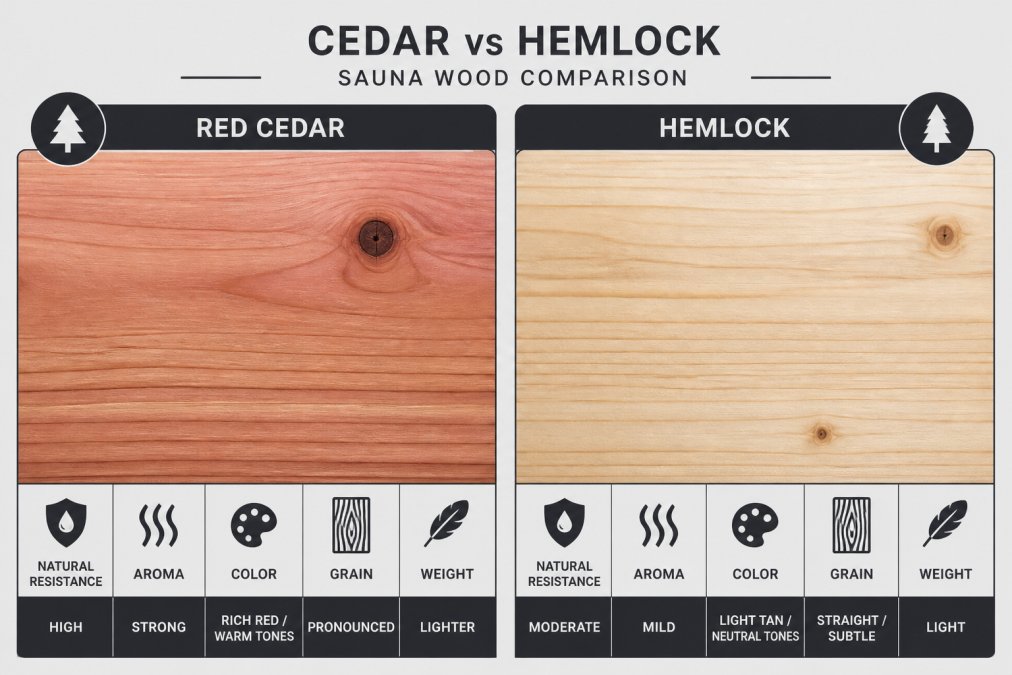
Cedar and hemlock are the two most common choices for infrared saunas, and they deliver distinctly different experiences. Cedar has a warm-toned appearance, a characteristic aroma, and natural rot resistance. Hemlock is denser, more affordable, and offers a neutral wood scent. The choice between them hinges on aroma preference, budget, and how you plan to use the cabin.
Cedar Characteristics and Performance
Red cedar is a softwood prized for its natural aromatics and dimensional stability in humid environments. Canadian western red cedar, the species used in our 1-Person Red Cedar Far Infrared Sauna with Bluetooth and 6-Person Cedar Infrared Sauna, resists warping and maintains its shape through temperature swings.

Cedar's natural oils give it a distinctive aroma that many users find pleasant during a session. The wood grain is tight and uniform, producing a warm golden-brown appearance that darkens slightly over time.
Cedar is naturally rot-resistant, meaning it tolerates the moisture and temperature cycles of a sauna environment without developing mold or decay. This resistance reduces maintenance demands compared to untreated softwoods. The wood is also an excellent insulator, which means less heat escapes through the walls, keeping the cabin warm with fewer heater watts.
The trade-off is cost. Cedar commands a higher price than hemlock because of its aromatic properties and durability. For buyers prioritizing aroma, appearance, and long-term stability, cedar delivers on all three fronts.
Hemlock Characteristics and Performance
Hemlock is a dense softwood that offers neutral aesthetics and straightforward performance in infrared saunas. Canadian hemlock, used in our 2-Person Corner Far Infrared Sauna and 2-Person Infrared Sauna with Premium Audio, is lighter in color than cedar, closer to pale cream or light tan, and develops minimal aroma during use.

Hemlock's density makes it sturdy and resistant to dents and surface damage. The wood grain is finer and less pronounced than cedar, giving the cabin a cleaner, more understated look. For users who prefer a neutral environment without strong wood scent, hemlock is the practical choice.
Hemlock performs well in heat and moisture, though it's less naturally rot-resistant than cedar. Proper ventilation and post-session drying are important to prevent moisture accumulation.
Hemlock costs less than cedar, making it accessible for buyers building a recovery room on a tighter budget. The durability is solid when the cabin is properly maintained, and the neutral aesthetic works in any room design.
Best Wood for Infrared Sauna: Comparison Table
| Property | Cedar | Hemlock |
|---|---|---|
| Aroma | Distinctive cedar scent during sessions | Neutral, minimal odor |
| Color | Golden-brown, darkens with age | Pale cream to light tan |
| Rot Resistance | High, naturally resistant | Moderate, requires proper drying |
| Dimensional Stability | Excellent, minimal warping | Good, stable with ventilation |
| Insulation | Superior heat retention | Good, slightly lower than cedar |
| Maintenance | Minimal, low moisture risk | Regular ventilation needed |
| Durability | 20+ years with normal use | 15-20 years with proper care |
| Cost | Higher | Lower |
| Best For | Aroma preference, premium finish | Budget-conscious, neutral aesthetic |
Wood Properties That Affect Infrared Sauna Performance
The way wood responds to heat and moisture determines how long your cabin lasts and how comfortable it feels during use. Three properties stand out: moisture resistance, heat resistance, and aroma profile.
Moisture Resistance and Dimensional Stability
Wood expands when it absorbs moisture and shrinks when it dries. In an infrared sauna, this cycle happens repeatedly, the cabin heats, moisture rises, then cools between sessions. Woods that resist this movement stay flat and structurally sound. Woods that swell and shrink excessively develop gaps between boards, cracks at joints, and warped benches.
Cedar's tight grain and natural oils make it highly resistant to moisture absorption. The wood swells and shrinks minimally, so gaps rarely develop between boards. Hemlock, being denser but less naturally water-resistant, absorbs more moisture. Over time, this can lead to slight warping or cupping of bench boards if ventilation is poor.
Both woods perform acceptably in a well-ventilated infrared sauna. The key is airflow. After each session, leave the door open for 15-20 minutes to allow moisture to escape. Cedar requires less active management; hemlock benefits from consistent ventilation habits.
Heat Resistance and Surface Temperature
Both cedar and hemlock tolerate the temperatures inside an infrared sauna (typically 120-140°F) without degradation. Neither wood scorches or becomes brittle at these temperatures. The difference is in how they conduct and retain heat.
Cedar's lower density and natural oils make it a better insulator. Heat doesn't penetrate the wood as quickly, so the surface stays slightly cooler than the air temperature. This is a comfort feature, you can sit longer on cedar benches without the wood feeling hot to bare skin.
Hemlock's density means it conducts heat more readily. The bench surface reaches closer to the air temperature inside the cabin. For users who prefer a warmer bench or who don't mind the sensation, this is neutral. For those sensitive to hot surfaces, cedar's insulating properties offer an advantage.
Natural Aroma and Odor Profile
Cedar's aromatic compounds are released when heated. These volatile oils create the distinctive cedar scent that many users associate with sauna sessions.
Hemlock produces minimal aroma. The wood has no significant volatile compounds, so it releases no noticeable scent during heating. This neutrality appeals to users who prefer a blank sensory canvas or who are sensitive to strong wood smells.
1-Person Red Cedar Far Infrared Sauna with Bluetooth →
Aroma tolerance varies; do not assume a wood species will be suitable for everyone. Cedar's scent is a preference. Hemlock's silence is also a preference. If aroma is important to your session experience, cedar is the clear choice. If you want to avoid any wood smell, hemlock delivers.
Sauna Wood Maintenance and Longevity
Both cedar and hemlock require minimal active maintenance, but the routines differ slightly.
Cedar maintenance: After each session, wipe down the benches and interior surfaces with a soft, dry cloth to remove sweat and moisture. Weekly, check the glass door and vents for debris.
Hemlock maintenance: The routine is similar, but hemlock benefits from more consistent post-session ventilation. Leave the door open longer to ensure moisture dries completely. Weekly checks are important to catch any moisture pooling in corners or under benches.
Both woods last 15-20+ years with normal use and proper care. Cedar typically outlasts hemlock by a few years because of its natural rot resistance, but both are durable investments for a recovery room.
Never use harsh chemicals, abrasive scrubbers, or power washers on either wood. These damage the surface and strip away natural protective properties. Mild soap and water work for occasional cleaning; most of the time, a dry cloth is all you need.
Which Wood Should You Choose?
The decision between cedar and hemlock comes down to four factors: aroma preference, budget, maintenance tolerance, and long-term expectations.
Choose cedar if:
- You want a distinctive, pleasant wood aroma during sessions
- You prefer minimal maintenance and maximum durability
- You value the warm, golden appearance of the cabin
- You're building a premium recovery room and budget is flexible
- You plan to use the sauna for 20+ years
Choose hemlock if:
- You prefer a neutral, scent-free environment
- You want to minimize upfront cost
- You're comfortable with consistent post-session ventilation routines
- You like the clean, understated look of pale wood
- You're building a functional recovery space without premium finishes
Both woods perform reliably in infrared saunas when properly maintained. The "best" choice isn't objective, it's the one that matches your preferences and lifestyle.
At Stack For Wellness, our cedar and hemlock cabins both feature low-EMF heaters, dual control panels, and professional-grade construction. The difference is purely the wood experience you prefer. Our 1-Person Red Cedar Far Infrared Sauna delivers the full cedar experience with eight heating panels and a heated marble floor, ideal for solo sessions. Our 2-Person Corner Far Infrared Sauna in hemlock fits tight spaces and offers two-person capacity without the aroma, in a corner layout.
Conclusion
Selecting the right infrared sauna wood species is one of the most important decisions in building a recovery room. Cedar and hemlock represent different philosophies: cedar prioritizes experience and longevity; hemlock prioritizes simplicity and accessibility. Neither is objectively superior, the best choice depends on what you value most.
This product is intended for general wellness and relaxation. It is not a medical device and is not intended to diagnose, treat, cure, or prevent any disease.
Ready to build your recovery room? Stack For Wellness offers cedar and hemlock infrared saunas with transparent technical specifications, heater count, wood species, EMF ratings, so you choose with confidence. Explore our curated selection and create the recovery environment that matches your space and your preferences.
Frequently Asked Questions
Does cedar wood smell strong in an infrared sauna?
Cedar aroma is strongest in the first 10-15 minutes of a session, then fades as the volatile oils dissipate. The scent is gentle, not overwhelming, and many users find it pleasant and relaxing. If you prefer no wood aroma at all, hemlock is the better choice.
Is hemlock wood durable in a sauna environment?
Yes. Hemlock is dense and stable, lasting 15-20 years with proper care. The key is consistent ventilation after each session to allow moisture to escape. Cedar lasts slightly longer (20+ years) because of its natural rot resistance, but hemlock is fully durable when maintained correctly.
Can I apply a finish or sealant to cedar or hemlock in my sauna?
No. Standard finishes and sealants emit volatile compounds when heated and can damage the wood's natural properties. Cedar and hemlock are designed to be used unfinished. Their natural oils and density provide sufficient protection when the cabin is properly ventilated and dried between sessions.
Which wood is better for a small space: cedar or hemlock?
Both work in small spaces. Cedar's superior insulation means it retains heat efficiently, so smaller cabins stay warm with fewer heaters. Hemlock is equally suitable for compact rooms and typically costs less. The choice depends on aroma preference and budget, not space constraints.
Frequently Asked Questions
What is the best wood for an infrared sauna?
Cedar and hemlock are the most common choices for infrared saunas. Cedar offers natural rot resistance, dimensional stability, and a pleasant aroma, making it ideal for long-term use. Hemlock provides excellent moisture resistance and thermal performance at a lower cost. The best choice depends on your budget, space, and preference for aroma. Both perform well in infrared sauna environments when properly maintained.
Is cedar or hemlock better for an infrared sauna?
Cedar and hemlock each have distinct advantages. Cedar resists warping and mildew naturally and has a characteristic scent many find appealing. Hemlock resists moisture exceptionally well and maintains dimensional stability in humid conditions. Cedar tends to be more expensive, while hemlock offers similar performance at a lower price point. Your choice depends on budget, aesthetic preference, and whether you value cedar's natural aroma.
How do I maintain infrared sauna wood to extend its lifespan?
After each session, wipe interior surfaces with a soft, dry cloth to remove moisture. Weekly, check vents and the glass door for debris. Avoid harsh chemicals or abrasive cleaners that damage the wood finish. Ensure proper ventilation in the sauna room to prevent moisture buildup. Cedar and hemlock both benefit from these simple routines. Regular maintenance prevents warping, discoloration, and extends the wood's life by years.
Does sauna wood species affect the smell inside the sauna?
Yes, wood species significantly influence aroma. Cedar produces a distinctive, pleasant scent when heated, which many people enjoy during sessions. Hemlock has a milder, more neutral odor profile. If you prefer a sauna experience with natural wood aroma, cedar is the better choice. If you want minimal scent or are sensitive to strong odors, hemlock provides a more neutral environment. Check the specific sauna's materials, finishes and operating instructions rather than relying on the wood species alone.


